






Peptides
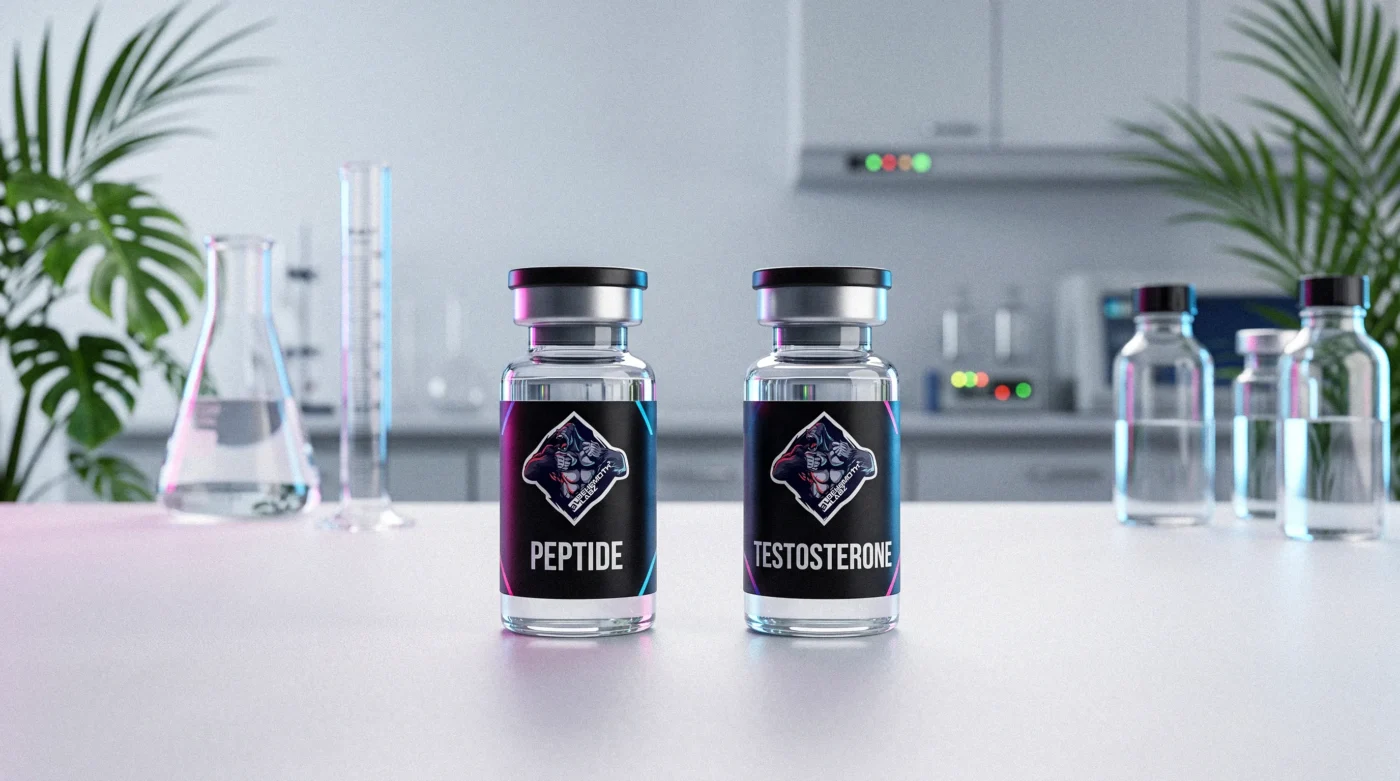
Peptides vs Testosterone: A Comparative Preclinical Research Overview
23
Jul
Jul
Introduction
Testosterone and synthetic peptides appear in the same research conversations — but they are fundamentally different compound classes with distinct mechanisms, regulatory statuses, and adverse signal profiles in preclinical data. This article provides a mechanistic and pharmacological comparison of these two compound categories strictly within a preclinical research framework. Neither class is approved for veterinary or any other use by the FDA without a prescription, and the compounds referenced here are supplied by BehemothLabz strictly for laboratory research only. Researchers looking to buy research peptides for laboratory investigation can source them as research-grade compounds at BehemothLabz. All products are independently third-party tested, with COA available per batch. Sold strictly for laboratory research only. Disclaimer: All research peptides and research-grade testosterone referenced in this article are research compounds not approved by the U.S. Food and Drug Administration (FDA) for laboratory, veterinary, or any other use. It is strictly for in vitro and preclinical laboratory research only.What Is Testosterone? — Mechanistic Profile
Testosterone is an endogenous steroid hormone produced primarily in the testes in male mammals, with smaller amounts in the ovaries in females. Structurally, it is a lipid-based compound built on the classic four-ring steroid nucleus. In preclinical models, testosterone binds directly to androgen receptors (AR), enters the cell nucleus, and influences gene expression through genomic mechanisms. It is the benchmark reference compound in androgen research. Regulatory note: Pharmaceutical-grade testosterone is a controlled substance (Schedule III in the US). Research-grade testosterone for laboratory use is a separate category with strict regulatory requirements. BehemothLabz does not supply testosterone for any non-research application.What Are Research Peptides? — Mechanistic Profile
Research peptides are short chains of amino acids (typically 2–50 residues) that operate through receptor-mediated signaling pathways rather than direct genomic mechanisms. They do not share the steroid backbone of testosterone. Examples relevant to growth-related research include growth hormone secretagogues (GHRPs, ipamorelin), tissue repair peptides (BPC-157, TB-500), and bioregulatory peptides (Khavinson series). Their mechanisms are compound-specific and cannot be generalized across the class.Mechanistic Differences in Preclinical Models
The following mechanistic differences have been documented in preclinical model data:- Receptor interaction: Testosterone binds directly to androgen receptors with full agonistic activity, directly suppressing the hypothalamic-pituitary-testicular axis (HPTA) in preclinical models. Most research peptides do not interact with the AR axis.
- Hypothalamic-pituitary axis: Anabolic-androgenic compounds suppress natural testosterone production in animal models via negative feedback. Growth hormone secretagogue peptides stimulate rather than suppress endogenous hormone axis activity in preclinical models.
- Organ-level adverse signal profile: In preclinical data, androgenic compounds are associated with hepatotoxic signals (particularly oral 17-alpha-alkylated analogues), cardiovascular adverse signals, and erythropoietic changes. Research peptides have distinct, compound-specific adverse signal profiles that do not universally replicate these androgenic signals in animal models.
- Genomic vs. signaling mechanisms: Testosterone exerts genomic effects via nuclear AR. Research peptides primarily operate through membrane receptor signaling cascades without direct nuclear receptor binding in most cases.
Adverse Signals in Investigational Data: A Category-Level Overview
Preclinical investigational data document distinct adverse signal categories for each compound class: Androgenic compounds (testosterone-class):- HPTA suppression and endogenous testosterone production changes in animal models
- Hepatotoxic signals with oral alkylated analogues in rodent studies
- Erythropoietic parameter changes in animal models
- Cardiovascular marker changes documented in some preclinical studies
- Injection site reactions in animal model studies
- GH secretagogue peptides: appetite stimulation, fluid retention markers in animal models
- Compound-specific receptor interaction adverse signals depending on the specific peptide researched
- No HPTA suppression documented for most non-androgenic research peptides in animal models
Risks and Limitations of Comparative Peptide/Androgenic Compound Research
This section is mandatory reading before working with this compound in any laboratory setting. Research Design Caution Comparing compound classes for 'safety' in any non-preclinical context constitutes a drug marketing claim. All comparative data in this article are restricted to mechanistic differences in preclinical model literature only. Compound-Specific Profiles Adverse signal profiles cannot be generalized across 'peptides' as a class. Each compound must be evaluated individually. Researchers should consult primary literature for the specific compound being investigated. Storage and Handling Store all research peptides and androgenic research compounds according to compound-specific stability data. Use appropriate PPE. Handle under aseptic conditions where relevant. Toxicity and Data Limitations No chronic toxicity data exist for most research peptides. Long-term androgenic compound data derive from decades of preclinical and published investigational literature, but extrapolation across contexts is not valid. Regulatory Status Neither research-grade peptides nor research-grade androgenic compounds supplied by BehemothLabz carry any approved indication. All use must be confined to IACUC-compliant laboratory research settings.Conclusion
Testosterone and research peptides are mechanistically distinct compound classes. The key differences lie in their receptor interactions, hypothalamic-pituitary axis effects, and adverse signal profiles in preclinical data — all of which are compound-specific and context-dependent. This article provides a mechanistic framework for researchers designing comparative studies involving these compound classes. It does not constitute a safety comparison for any non-research context, and neither compound class is approved for any non-research application. FAQsAre peptides and testosterone the same compound class?
No. Testosterone is a lipid-based steroid hormone with a four-ring steroid nucleus. Research peptides are short chains of amino acids. They differ in chemical structure, mechanism of action, receptor interaction profiles, and adverse signal data in preclinical models.Do research peptides suppress the testosterone axis in animal models?
Most research peptides do not interact with the hypothalamic-pituitary-testicular axis. Growth hormone secretagogue peptides stimulate rather than suppress endogenous GH axis activity in animal models. This contrasts with androgenic compounds, which suppress natural testosterone production via negative feedback in preclinical models.What mechanistic differences have been documented in preclinical data?
Key mechanistic differences documented in preclinical data include: testosterone acts via direct androgen receptor genomic binding; most research peptides act via membrane receptor signaling cascades. Testosterone suppresses the HPTA in animal models; most peptides do not. Adverse signal profiles differ substantially between compound classes and between individual compounds within each class.Is it possible to make a safety comparison between these compound classes?
Not in any non-research context. Adverse signal profiles must be evaluated compound-by-compound in preclinical data. A categorical 'safer' claim between compound classes constitutes a drug marketing claim and is not supported by preclinical literature as a generalization.Where can I find research-grade compounds for laboratory investigation?
Research use only; not for human or veterinary use.References
Ganesan K, Keong TT. Drug Insight: Testosterone and selective androgen receptor modulators as anabolic therapies for chronic illness and aging. Nature Clinical Practice Urology. 2006;3(8):429–439. https://pubmed.ncbi.nlm.nih.gov/16932274/