


SARMs
RAD 150 vs RAD 140 Explained: Potency, Effects, and the Best Option
21
Apr
Apr
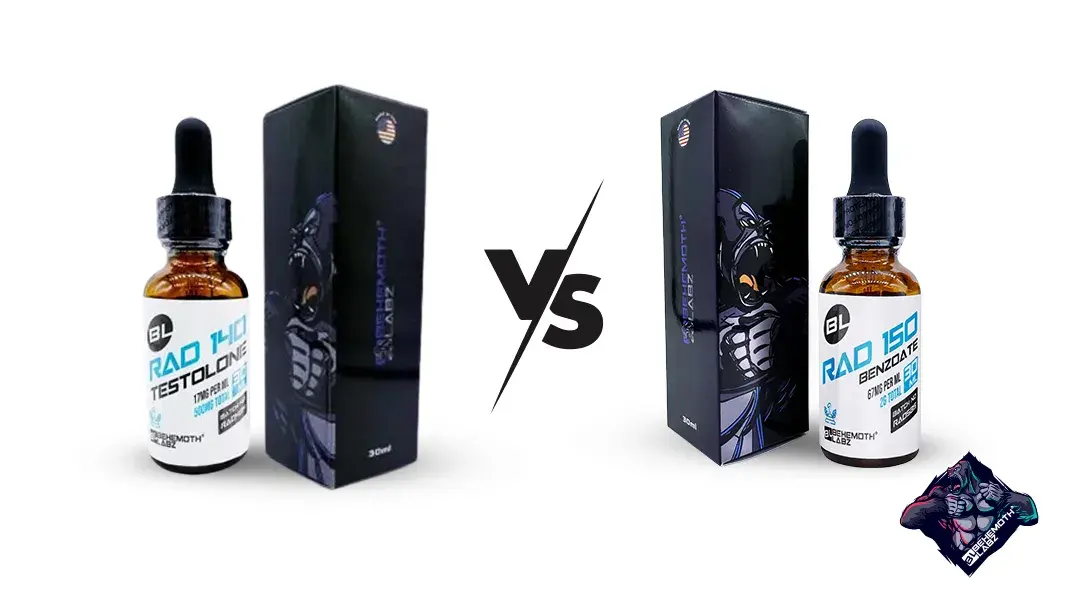
For most research applications, RAD-140 is the stronger starting point. It has a substantially larger published preclinical literature, a well-characterized AR binding profile (Ki ~7 nM), and a pharmacokinetically documented elimination half-life of approximately 44–48 hours. RAD-150 extends activity marginally further via its benzoate ester but carries far less published data. Both compounds are investigational only. The FDA approves neither for human or veterinary use. Two SARMs. One parent compound. One structural modification. That is the rad 140 vs rad 150 debate at its core — and it is a narrower distinction than most comparison articles suggest. RAD-140 (Testolone) is one of the most studied non-steroidal SARMs in the preclinical literature, with peer-reviewed pharmacokinetic data, neuroprotective pathway research, and AR tissue-selectivity studies accumulated over more than a decade. RAD-150 (TLB-150 Benzoate) takes RAD-140's molecular backbone and adds a benzoate ester (a structural modification) designed to extend the compound's active window in experimental systems. The difference between them is not a question of potency in any absolute sense. It is a pharmacokinetic profile question. And whether that distinction is meaningful for a given research protocol depends entirely on what the study is designed to measure. Disclaimer: RAD-140 and RAD-150 are research compounds not approved by the U.S. Food and Drug Administration (FDA) for human or veterinary use. They are not a dietary supplement or consumer product. They are not intended to diagnose, treat, cure, or prevent any disease. These compounds are strictly for laboratory and research purposes only.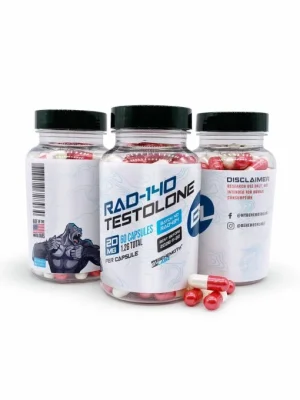 Investigational pharmacokinetic data have characterized RAD-140's elimination half-life (t½) at approximately 44.7 hours. This is a figure that informs dosing interval design in research study protocols. RAD-140 does not convert to DHT via 5-alpha reductase and does not aromatize to estrogen in preclinical metabolism studies.
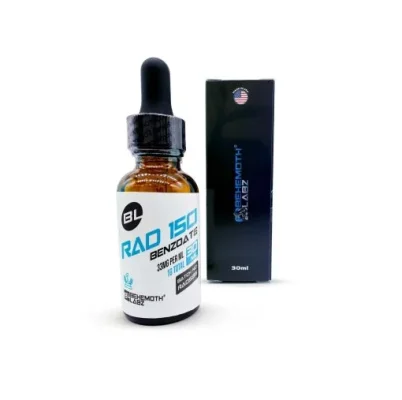 RAD-150 engages the AR via the same selective agonist mechanism as RAD-140, targeting androgen receptors in muscle and bone tissue in experimental systems. Published peer-reviewed research on RAD-150 specifically is significantly more limited than RAD-140 data — no peer-reviewed pharmacokinetic or safety characterization studies for RAD-150 have been indexed on PubMed as of this writing.
Note: The half-life differential between RAD-140 (~44.7 hours, investigationally documented) and RAD-150 (~48–60 hours, preclinical estimate) is modest (approximately 10–35%), not double as sometimes stated in vendor content. Researchers should not overestimate the practical dosing frequency advantage of RAD-150 relative to RAD-140.
RAD-140 or RAD-150 for Research
RAD-140 is the more established research compound. Its receptor binding profile, pharmacokinetics, and tissue selectivity data are better documented in the published literature. This makes it the lower-risk choice when study reproducibility and cross-referencing with prior data are priorities. RAD-150 is the appropriate choice when a research protocol specifically requires sustained AR activation over a marginally extended dosing window. It carries substantially less published data than its parent compound, which means its full risk profile in preclinical models remains less defined.What Is RAD-140 (Testolone)?
RAD-140 is a non-steroidal SARM with molecular formula C₂₀H₁₆ClN₅O₂ and molecular weight 393.83 g/mol (CAS: 1182367-47-0), originally synthesized by Radius Health. It binds the androgen receptor's ligand-binding domain with a Ki of approximately 7 nM (comparable to testosterone) and acts as a full AR agonist in skeletal muscle and bone tissue in preclinical models. In prostate tissue models, it exhibits partial agonism or competitive antagonism depending on the co-regulatory environment of the cell. Investigational pharmacokinetic data have characterized RAD-140's elimination half-life (t½) at approximately 44.7 hours. This is a figure that informs dosing interval design in research study protocols. RAD-140 does not convert to DHT via 5-alpha reductase and does not aromatize to estrogen in preclinical metabolism studies.What Is RAD-150 (TLB-150 Benzoate)?
RAD-150 is the esterified derivative of RAD-140, produced through benzoate esterification of the RAD-140 backbone. Its molecular formula is C₂₇H₂₀ClN₅O₃ and molecular weight is 497.93 g/mol (CAS: 1208070-53-4). The benzoate ester group increases lipophilicity and metabolic stability, extending the estimated half-life to approximately 48–60 hours in preclinical models. This is modestly longer than RAD-140's investigationally documented 44.7-hour elimination half-life. RAD-150 engages the AR via the same selective agonist mechanism as RAD-140, targeting androgen receptors in muscle and bone tissue in experimental systems. Published peer-reviewed research on RAD-150 specifically is significantly more limited than RAD-140 data — no peer-reviewed pharmacokinetic or safety characterization studies for RAD-150 have been indexed on PubMed as of this writing.RAD-140 vs RAD-150: Side-by-Side Comparison Table
| Property | RAD-140 | RAD-150 |
| Also Known As | Testolone | TLB-150 Benzoate |
| Compound Type | Non-steroidal SARM | Esterified non-steroidal SARM |
| Molecular Formula | C₂₀H₁₆ClN₅O₂ | C₂₇H₂₀ClN₅O₃ |
| Molecular Weight | 393.83 g/mol | 497.93 g/mol |
| CAS Number | 1182367-47-0 | 1208070-53-4 |
| Target Receptor | Androgen Receptor (AR) | Androgen Receptor (AR) |
| AR Binding (Ki) | ~7 nM | Not independently confirmed |
| Half-Life | ~44.7 hours (investigational PK data) | ~48–60 hours (preclinical estimate) |
| Research Dose Range | 0.1–10 mg/kg (animal models) | No standardized range published |
| Published Literature | Extensive — PubMed-indexed studies | Limited — no peer-reviewed PK data |
| Stacking Notes | Established solo reference compound | Extended-window protocols; no stack data |
| Available at Behemoth Labz | Capsules + Liquid | Liquid |
| PubChem CID | 44200882 | 162192581 |
| WADA Status | S1.2 Prohibited (2026) — Other Anabolic Agents | S1.2 Prohibited (2026) — Other Anabolic Agents |
When Should Researchers Choose RAD-140?
- When study reproducibility depends on cross-referencing published data, RAD-140 is the correct choice. The Miller et al. (2010) preclinical characterization study established RAD-140's AR binding profile and anabolic-to-androgenic ratio in rodent models. The Jayaraman et al. (2014) study characterized neuroprotective pathway activation in hippocampal neuron models. No equivalent published dataset exists for RAD-150.
- When the AR mechanism itself is the research focus, tissue selectivity, co-regulator recruitment in muscle vs. prostate models, or structure-activity comparison, then RAD-140 is the established reference compound. Its anabolic-to-androgenic ratio of approximately 90:1 in rodent models (Miller et al., 2010) remains foundational in SARM tissue-selectivity research. RAD-150 has no equivalent published figure.
- When dosing interval precision matters, RAD-140's investigationally documented 44.7-hour elimination half-life provides a published pharmacokinetic anchor for protocol design. RAD-150's half-life of 48–60 hours is an estimate from preclinical models only. Its full PK profile remains uncharacterized in the peer-reviewed literature.
When Should Researchers Choose RAD-150?
- When sustained AR engagement over a marginally longer dosing window is the specific research variable, RAD-150's benzoate ester is its documented structural advantage. The ester is cleaved enzymatically in vivo, releasing the active RAD-140 moiety at a slower rate — a pharmacokinetic property that may be relevant in protocols examining acute vs. sustained AR activation patterns in tissue models.
- When the structure-activity relationship of ester-modified SARMs is under investigation, RAD-150 is one of the few esterified SARM derivatives available at research grade. Studies comparing parent compound vs. esterified variant behavior at the AR represent an underexplored area of SARM pharmacology.
- When dosing frequency is a practical constraint in multi-week in vivo protocols, the slightly longer active window of RAD-150 may reduce the number of administrations required — though this has not been confirmed in peer-reviewed PK studies specific to the compound, and the practical advantage over RAD-140 is smaller than often implied.
Can RAD-140 and RAD-150 Be Stacked in Research?
RAD-140 and RAD-150 both bind the androgen receptor as selective agonists via the same mechanism. Combining them does not produce a complementary dual-target effect — it produces additive AR occupancy at a single receptor site. The relevant research question is whether sustained vs. acute AR activation produces different downstream transcriptional outcomes, which would be better studied as a controlled PK/PD comparison than a combination protocol. No peer-reviewed data exists on the combination in any model system. Researchers should treat stacking these two compounds as adding pharmacokinetic complexity without an established mechanistic justification.What Are the Risks and Limitations of RAD-140 and RAD-150 Research?
This section is mandatory reading before working with either compound in any laboratory setting.- Handling Precautions: Both compounds should be handled by trained laboratory personnel only, in a controlled research environment. Use appropriate PPE at all times — nitrile gloves, eye protection, and a lab coat as a minimum. Avoid direct skin contact, inhalation of powder, or mucosal exposure during preparation and handling.
- Exposure Risks: RAD-140 and RAD-150 are SARM research compounds thought to bind the androgen receptor and modulate anabolic signaling pathways in skeletal muscle and bone tissue in preclinical models. No human safety profile has been established for RAD-150. Accidental exposure must be managed through institutional biosafety protocols.
- Storage: Store both compounds in a sealed, light-protected container at −20°C for long-term archival. Working stocks may be kept at controlled room temperature (15–25°C) away from heat and humidity for short-term use. Avoid repeated freeze-thaw cycles.
- Toxicity and Data Limitations: No chronic toxicity data exist for RAD-150 in any published model. RAD-140's investigational data covers a limited duration only. Published peer-reviewed case reports have documented cholestatic liver injury, HPG axis suppression, and myocarditis associated with RAD-140 exposure — findings from the scientific literature, not from approved clinical use. RAD-150's adverse event profile is currently uncharacterized beyond theoretical extrapolation from its parent compound.
- WADA Prohibition: Both RAD-140 and RAD-150 are prohibited under the WADA 2026 Prohibited List, Section S1.2 (Other Anabolic Agents), in-competition and out-of-competition. Neither may be used in any context involving human subjects subject to anti-doping jurisdiction.
Behemoth Labz Verdict: RAD-140 vs RAD-150
RAD-140 vs RAD-150 across every search variation comes down to published data depth, not compound naming. RAD-140 remains the more defensible choice for the majority of research applications. Its AR binding parameters are confirmed (Ki ~7 nM), its elimination half-life is investigationally documented (~44.7 hours), its tissue-selectivity profile is published, and its adverse event signals are in the peer-reviewed record. RAD-150 offers a modestly extended active window via its benzoate ester. However, the half-life advantage over RAD-140 is smaller than commonly stated in vendor content, and its safety and efficacy data remain largely absent from peer-reviewed literature. Researchers should approach RAD-150 as a structural variant under investigation rather than an upgrade. Both compounds are investigational only. Long-term safety data for both remain absent, and neither should be interpreted as approved or suitable for human use.FAQs — RAD-140 vs RAD-150
Is RAD-150 stronger than RAD-140? No peer-reviewed evidence confirms RAD-150 is more potent at the androgen receptor. The primary documented difference is pharmacokinetic — RAD-150's benzoate ester extends its estimated half-life to 48–60 hours versus RAD-140's investigationally documented ~44.7 hours. The practical difference is modest. Whether extended active time translates to greater AR signaling in preclinical models has not been independently established. What is the difference between RAD-140 and RAD-150? RAD-150 is RAD-140 with a benzoate ester group added through chemical esterification. This raises molecular weight from 393.83 g/mol to 497.93 g/mol, increases lipophilicity, and extends estimated half-life from ~44.7 hours (RAD-140, investigationally documented) to ~48–60 hours (RAD-150, preclinical estimate only). Both target the androgen receptor via the same mechanism. The difference between rad 140 and rad 150 in a research context is the dosing window and data availability, not the receptor mechanism. Which should I choose for my research? RAD-140 for protocols requiring well-characterized PK data and cross-referencing with published literature — Miller et al. (2010) for AR mechanism, Jayaraman et al. (2014) for neuroprotective pathway data. RAD-150, when marginally sustained AR engagement is the specific variable under investigation. Both are for laboratory research use only. Neither is approved for human or veterinary use. Can RAD-140 and RAD-150 be stacked? Both target the same androgen receptor via the same mechanism. Combining them produces additive AR occupancy at a single receptor site — not a complementary dual-target effect. No peer-reviewed data exists on the combination in any model system. Researchers should treat such a stack as pharmacokinetic complexity without an established mechanistic justification.References
- Miller CP, et al. (2010). Design, Synthesis, and Preclinical Characterization of the Selective Androgen Receptor Modulator (SARM) RAD140. ACS Medicinal Chemistry Letters, 2(2), 124–129. PMID: 24900290. https://pubmed.ncbi.nlm.nih.gov/24900290/
- Jayaraman A, et al. (2014). Selective Androgen Receptor Modulator RAD140 Is Neuroprotective in Cultured Neurons and Kainate-Lesioned Male Rats. Endocrinology, 155(4), 1398–1406. PMID: 24428527. https://pubmed.ncbi.nlm.nih.gov/24428527/
