


SARMs
S23 SARM: Mechanism of Action, Preclinical Research, and Regulatory Status
Feb
S23 SARM is one of the more thoroughly characterized compounds in the selective androgen receptor modulator (SARM) class, largely because it was originally designed and studied as a candidate for hormonal male contraception rather than as a muscle-building agent (Jones et al., 2009). As a drug class, SARMs are androgen receptor (AR) agonists or antagonists whose activity can vary by target tissue, which is the pharmacological basis for describing some of them — though not necessarily S23, as the mechanism section below explains — as "tissue-selective" (Christiansen et al., 2020). Structurally, S23 is derived from an earlier compound known as C-6, and its high binding affinity at the androgen receptor has made it a frequent reference point in both musculoskeletal pharmacology research and anti-doping analytical chemistry. This guide consolidates what the primary preclinical literature actually shows about S23 — its molecular identity, mechanism, research applications, how it compares to other reference SARMs, and its current legal and anti-doping status — along with the risks and data limitations that any laboratory working with this compound needs to understand.
Disclaimer: S23 is a research compound not approved by the U.S. Food and Drug Administration (FDA) for human or veterinary use. It is not intended to diagnose, treat, cure, or prevent any disease. This content is strictly for laboratory research purposes only.
What Is S23 SARM?
S23 is a synthetic, non-steroidal selective androgen receptor modulator belonging to the arylpropionamide structural class. It was generated by replacing the para-nitro group on its precursor compound, C-6, with a cyano group — a modification that increased androgen receptor binding affinity relative to C-6 in the same preclinical pharmacology program (Jones et al., 2009).
Chemical identity:
| Property | Value |
|---|---|
| CAS Number | 1010396-29-8 |
| Molecular Formula | C₁₈H₁₃ClF₄N₂O₃ |
| Molecular Weight | ≈416.76 g/mol |
| IUPAC Name | (2S)-3-(4-chloro-3-fluorophenoxy)-N-[4-cyano-3-(trifluoromethyl)phenyl]-2-hydroxy-2-methylpropanamide |
| Chemical Class | Arylpropionamide SARM |
In radioligand binding assays, S23 shows an inhibitory constant (Ki) of approximately 1.7 nM and behaves as a full agonist at the androgen receptor rather than a partial agonist (Jones et al., 2009). Because it is a full agonist, S23 does not show the same degree of tissue-selective "sparing" of androgenic tissue seen in some other SARMs — a distinction covered in the mechanism section below.
What Is the Historical Background of S23 in Pharmacological Research?
S23 was developed within a university-based medicinal chemistry program focused on tissue-selective androgen receptor ligands, with the explicit research goal of evaluating it as an animal model of hormonal male contraception (Jones et al., 2009). This origin distinguishes S23 from SARMs developed primarily for muscle-wasting or osteoporosis indications.
Beyond contraception research, subsequent work has examined S23 in models of glucocorticoid- and hypogonadism-induced muscle atrophy, and in dose-dependent studies of bone mineral density, lean mass, and fat mass in animal subjects, which reported a dose-dependent increase in bone mineral density and lean mass alongside a reduction in fat mass (Alhalabi et al., 2025). S23 has never been the subject of a completed human clinical trial; the only human data on record come from a single, forensic-toxicology-style controlled oral dose administered to characterize its metabolites for anti-doping purposes, not a clinical efficacy or safety trial (Ameline et al., 2022).
How Does S23 SARM Work? Mechanism of Action
Mechanistically, S23 binds the ligand-binding domain of the androgen receptor with high affinity, producing a conformational change that recruits coactivator proteins and drives transcription of AR-responsive genes in muscle and bone tissue — a process thought to support myofiber protein synthesis and osteoblastic activity in preclinical models. This receptor-binding step is well characterized; the downstream physiological consequences remain hedged findings from animal studies, not established human effects.
An important, often-overlooked mechanistic detail is that S23 acts as a full agonist across both anabolic (muscle) and androgenic (prostate, seminal vesicle) tissue types in castrated-rat models, rather than as a narrowly muscle-selective ligand — unlike several comparator SARMs from the same research program that were more prostate-sparing and selectively maintained levator ani muscle size (Jones et al., 2009). In other words, the primary literature does not support marketing language that frames S23 as unusually "tissue-selective" or as having "minimal prostate effects." If anything, it is one of the less differentiated compounds in this class at the receptor level, even though its oral activity and potency have made it a popular subject of study.
At the level of the hypothalamic-pituitary-gonadal (HPG) axis, S23 administration in intact male rats produced dose-dependent suppression of luteinizing hormone (LH) and follicle-stimulating hormone (FSH), with S23 alone suppressing LH levels by more than 50% at doses above 0.1 mg per day (Jones et al., 2009) — the pharmacological basis for its use in reproductive-suppression and recovery research.
What Are the Primary Research Applications of S23 SARM?
Four areas of investigational interest dominate the published literature on S23:
- Hormonal male-contraception modeling. S23's dose-dependent suppression of LH, FSH, and downstream testosterone in male rodents is the original and most-cited research application, reflecting its initial characterization as a candidate agent for this purpose (Jones et al., 2009).
- Musculoskeletal and bone-density research. Animal studies have examined S23's effect on bone mineral density and lean-mass parameters under controlled dosing, reporting dose-dependent increases in bone mineral density and lean mass together with reductions in fat mass (Alhalabi et al., 2025).
- Muscle-atrophy modeling. S23 has been studied in models of glucocorticoid-induced and hypogonadism-induced muscle atrophy, extending its relevance beyond reproductive-axis research (Alhalabi et al., 2025).
- Analytical and anti-doping chemistry. Because S23 is detected in doping-control samples, a substantial and growing body of work focuses on characterizing its metabolites in canine (Thevis et al., 2010), equine (Cutler et al., 2025), and human urine and liver-microsome matrices (Ameline et al., 2022) for identification purposes.
What Do Preclinical Studies Show About S23 SARM?
Findings remain preclinical, model-specific, and not translatable to humans. Within that frame, animal studies report:
- Reproductive-axis suppression. Dose-dependent decreases in LH, FSH, and downstream androgen levels in male rats, with effects appearing at doses above roughly 0.1 mg per day (Jones et al., 2009).
- Skeletal and body-composition shifts. Dose-dependent increases in bone mineral density and lean mass, with corresponding decreases in fat mass, in rodent models (Alhalabi et al., 2025).
- Full androgenic and anabolic tissue activation. Increases in prostate, seminal vesicle, and levator ani muscle weight in castrated-rat assays, consistent with S23's classification as a full AR agonist rather than a narrowly tissue-selective one (Jones et al., 2009).
- Limited human data. The only human information available is a single, controlled 8 mg oral dose administered for analytical (not clinical) purposes, alongside an in vitro human liver-microsome metabolism study; no completed clinical trial exists for S23 (Ameline et al., 2022).
How Does S23 Compare to Other Reference SARMs?
Comparing S23 to its own structural precursor and to a chemically distinct reference SARM helps clarify what makes its receptor-binding profile distinctive — and where the "tissue-selective" label commonly applied to it in commercial contexts does not hold up against the primary pharmacology data.
| Compound | Chemical Class | AR Binding Affinity (Ki) | Tissue-Selectivity Pattern (Preclinical) | Primary Research Context |
|---|---|---|---|---|
| S23 | Arylpropionamide SARM | ≈1.7 nM | Full agonist in both anabolic and androgenic tissues in castrated rats — limited tissue differentiation | Hormonal male-contraception and HPG-axis suppression models |
| C-6 (S23's structural precursor) | Arylpropionamide SARM | ≈4.9 nM | More anabolic-selective than S23 in the same assay system | Early scaffold for tissue-selective AR ligand design |
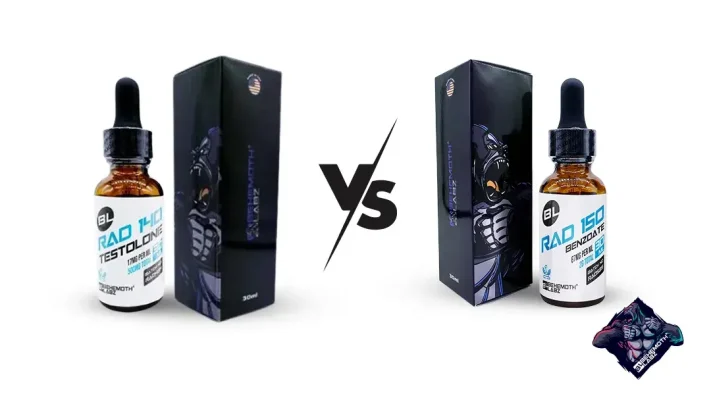
| RAD140 (Testolone) | Oxadiazole/aniline SARM (distinct scaffold) | ≈7 nM | Reported tissue-differential activity in preclinical assays, developed for a separate research program | Muscle-wasting and androgen-receptor-positive breast-cancer research models |
S23 and C-6 data are drawn from the same source characterizing S-23 as a hormonal male-contraception candidate (Jones et al., 2009); RAD140 data come from its original medicinal chemistry characterization (Miller et al., 2011).
What Is the Legal and Anti-Doping Status of S23 SARM Research?
S23 sits within a clearly defined, and increasingly scrutinized, regulatory position. Two entities govern this status: the FDA, which oversees human-use approval in the United States, and the World Anti-Doping Agency (WADA), which governs competitive sport.
The FDA has not approved S23, or any SARM, for human use, and the agency continues to receive adverse event reports associated with SARM use in consumer products, including cases of liver injury, cardiovascular events, and endocrine disruption (FDA, 2024). Separately, S23 is explicitly named on the WADA Prohibited List under the "Other Anabolic Agents" category, alongside other SARMs such as andarine, enobosarm, LGD-4033, RAD140, and YK-11, with all prohibited substances in this class classified as non-Specified Substances (WADA Prohibited List). This means S23 detection in an athlete sample is prohibited both in and out of competition, which is precisely why the analytical metabolite-identification research described above exists.
What Are the Risks and Limitations of S23 SARM Research?
This section is mandatory reading before working with S23 in any laboratory setting. It contains more points than any observational or research-application section above — a reflection of how much remains unknown or unresolved about this compound.
- Handling Precautions: S23 should be handled by trained laboratory personnel only, in a controlled research environment. Use appropriate PPE at all times. Avoid direct skin contact or inhalation of any reconstituted solution.
- Exposure Risks: S23 is an arylpropionamide research SARM thought to activate androgen receptor signaling broadly across anabolic and androgenic tissue in preclinical models. No human safety data exist for this compound.
- Storage: Store lyophilized S23 at −20 °C in a dry, dark environment. Protect from light, heat, and moisture.
- Toxicity and Data Limitations: No chronic toxicity data exist for S23. All findings originate from short-duration rodent, canine, or equine studies, plus one non-clinical human forensic dosing study; S23 has never been the subject of a clinical trial, so dose-response and long-term safety profiles in humans are entirely undefined.
- Regulatory and Abuse-Potential Uncertainty: Because S23 is subject to WADA prohibition and has generated documented FDA adverse-event reports tied to unauthorized human use of SARM-containing products, uncertainty around real-world misuse and dependency patterns is itself a data gap that laboratories should factor into risk assessments, chain-of-custody protocols, and institutional oversight.
Frequently Asked Questions
Is S23 approved for human or veterinary use? No. S23 is not approved by the FDA or any comparable regulatory body for human or veterinary use. It is sold and studied strictly as a laboratory research chemical.
Is S23 the same compound as C-6? No. C-6 is S23's structural precursor. A single chemical substitution — replacing a para-nitro group with a cyano group — increased S23's androgen receptor binding affinity relative to C-6 in the same preclinical assay system.
How does S23 compare mechanistically to RAD140? S23 and RAD140 are both SARMs but belong to different chemical scaffolds — arylpropionamide versus oxadiazole/aniline, respectively — and were developed through separate research programs with different tissue-selectivity findings in preclinical models. See the comparison table above for binding-affinity data.
What half-life has S23 shown in preclinical models? A validated, peer-reviewed pharmacokinetic half-life specific to S23 was not identified among the primary sources reviewed for this article. Estimates circulating in non-peer-reviewed sources should not be treated as established data; researchers should consult primary pharmacokinetic literature directly before designing dosing intervals.
Is S23 prohibited in competitive sport? Yes. S23 is explicitly listed on the WADA Prohibited List under "Other Anabolic Agents," and is prohibited both in and out of competition for athletes subject to WADA testing.
Can S23 be detected in doping-control testing? Yes. Multiple analytical chemistry studies have characterized S23's metabolites in canine, equine, and human urine and liver-microsome matrices specifically to support anti-doping detection methods, reflecting active laboratory interest in its metabolic and elimination profile.
Conclusion
S23 remains one of the most pharmacologically well-documented SARMs in the preclinical literature, largely because of its origin as a hormonal male-contraception research candidate rather than a muscle-building compound. Its high androgen-receptor binding affinity and full-agonist activity across both anabolic and androgenic tissue distinguish it from more narrowly tissue-selective SARMs, and its regulatory status — unapproved by the FDA, prohibited by WADA — is unambiguous. Data remain limited to animal, canine, and equine models plus a single non-clinical human dosing study; no completed clinical trials exist, and findings are not consistent across all model systems. S23 should be handled exclusively by qualified researchers under appropriate institutional, ethical, and legal oversight.
What to Look for in a Supplier When Sourcing Research-Grade S23?
Check that every batch is independently third-party tested for purity and identity, and that a Certificate of Analysis (COA) is available for each lot. Prefer suppliers that sell strictly for preclinical and in-vitro research use, and that clearly label products as not for human or veterinary use.
Note: All products referenced are strictly for LABORATORY AND RESEARCH PURPOSES ONLY. They are not to be used for any human or veterinary purposes.
References
- Jones, A., Chen, J., Hwang, D.J., Miller, D.D., Dalton, J.T. "Preclinical Characterization of a (S)-N-(4-Cyano-3-Trifluoromethyl-Phenyl)-3-(3-Fluoro,4-Chlorophenoxy)-2-Hydroxy-2-Methyl-Propanamide: A Selective Androgen Receptor Modulator for Hormonal Male Contraception." Endocrinology 150.1 (2009): 385–395. https://pmc.ncbi.nlm.nih.gov/articles/PMC2630904/
- Miller, C.P., et al. "Design, Synthesis, and Preclinical Characterization of the Selective Androgen Receptor Modulator (SARM) RAD140." ACS Medicinal Chemistry Letters 2.2 (2011): 124–129. https://pubs.acs.org/doi/abs/10.1021/ml1002508
- Alhalabi, H., Korsmeier, L., Thomas, A., Thevis, M. "Investigations Into the Urinary Metabolite Elimination Profile of the Selective Androgen Receptor Modulator S-23 in Studies Mimicking Contaminated Product Ingestion for Doping Control Purposes." Biomedical Chromatography (2025). https://www.ncbi.nlm.nih.gov/pmc/articles/PMC12023825/
- Thevis, M., et al. "Characterization of in Vitro Generated Metabolites of the Selective Androgen Receptor Modulators S-22 and S-23 and in Vivo Comparison to Post-Administration Canine Urine Specimens." Drug Testing and Analysis 2.11-12 (2010): 589–598. https://pubmed.ncbi.nlm.nih.gov/20967890/
- Cutler, C., et al. "Detection of the Selective Androgen Receptor Modulator S-23 and Its Metabolites in Equine Urine and Plasma Following Oral Administration." Drug Testing and Analysis (2025). https://pubmed.ncbi.nlm.nih.gov/38982651/
- Machek, S.B., Cardaci, T.D., Wilburn, D.T., Willoughby, D.S. "Considerations, Possible Contraindications, and Potential Mechanisms for Deleterious Effect in Recreational and Athletic Use of Selective Androgen Receptor Modulators (SARMs) in Lieu of Anabolic Androgenic Steroids: A Narrative Review." Steroids 164 (2020): 108753. https://pubmed.ncbi.nlm.nih.gov/33148520/
- Ameline, A., Gheddar, L., Raul, J.-S., Kintz, P. "In Vitro Characterization of S-23 Metabolites Produced by Human Liver Microsomes, and Subsequent Application to Urine After a Controlled Oral Administration." Journal of Pharmaceutical and Biomedical Analysis 212 (2022): 114660. https://doi.org/10.1016/j.jpba.2022.114660
- Christiansen, A.R., Lipshultz, L.I., Hotaling, J.M., Pastuszak, A.W. "Selective Androgen Receptor Modulators: The Future of Androgen Therapy?" Translational Andrology and Urology 9.Suppl 2 (2020): S135–S148. https://pmc.ncbi.nlm.nih.gov/articles/PMC7108998/
- World Anti-Doping Agency. "The Prohibited List." https://www.wada-ama.org/en/prohibited-list
- U.S. Food and Drug Administration. "FDA Warns of Use of Selective Androgen Receptor Modulators (SARMs) Among Teens, Young Adults." https://www.fda.gov/consumers/consumer-updates/fda-warns-use-selective-androgen-receptor-modulators-sarms-among-teens-young-adults
ATTENTION: This content is for LABORATORY AND RESEARCH PURPOSES ONLY. Not for human or veterinary use. Educational purpose only. No human consumption.
v>
