


SARMs
Cardarine vs Ostarine | Which SARM is Better

24
Feb
Feb
Ostarine (MK-2866) is a selective androgen receptor modulator. Cardarine (GW-501516) is not a SARM — it is a PPARδ agonist. They target entirely different receptors via entirely different signaling pathways. Choosing between them in a research context is not a question of which is stronger. It is a question of which receptor pathway the protocol is designed to study. Both Cardarine vs Ostarine are investigational only. The FDA approves neither for human nor veterinary use. This is the first thing most comparison articles get wrong: Ostarine and Cardarine are routinely grouped as "SARMs" and compared as if they are variations of the same compound class. They are not. Ostarine binds the androgen receptor. Cardarine activates the peroxisome proliferator-activated receptor delta — a nuclear receptor involved in fatty acid oxidation and mitochondrial energy metabolism. These are separate receptor families. They produce different downstream effects in preclinical models. They carry different risk profiles. And critically, Cardarine's clinical development was abandoned in 2007 after multi-organ carcinogenicity signals emerged in long-term animal studies — a fact that belongs at the center of any honest comparison, not buried in a footnote. What follows is a research-context overview of both compounds— their mechanisms, data, differences, and the risk picture any researcher needs before working with either. Disclaimer: Ostarine (MK-2866) and Cardarine (GW-501516) are research compounds not approved by the U.S. Food and Drug Administration (FDA) for human or veterinary use. They are not dietary supplements or consumer products. They are not intended to diagnose, treat, cure, or prevent any disease. These compounds are strictly for laboratory and research purposes only.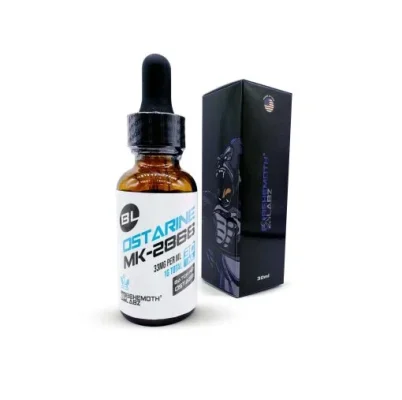 Ostarine binds the androgen receptor's ligand-binding domain with a Ki of approximately 3.8 nM — higher affinity than RAD-140's reported Ki of ~7 nM in some binding assay comparisons. In preclinical models, it acts as a full AR agonist in skeletal muscle and bone tissue while demonstrating reduced androgenic activity at reproductive organ tissue — the tissue-selective profile that defines the SARM compound class. Its estimated half-life is approximately 24 hours in pharmacokinetic studies, supporting stable dosing intervals in in vivo research designs. Ostarine does not convert to DHT via 5-alpha reductase and does not aromatize to estrogen in preclinical metabolic studies. Of all the SARMs in the research compound space, Ostarine has the most accumulated peer-reviewed investigational data — including both preclinical animal studies and early-phase human investigational data.
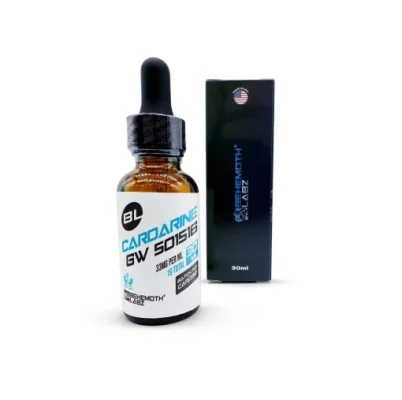 Cardarine is not a SARM. It does not bind the androgen receptor. It targets PPARδ — a nuclear receptor that regulates transcription of genes involved in fatty acid oxidation, mitochondrial biogenesis, and energy metabolism. Binding occurs with an EC₅₀ of approximately 1 nM at PPARδ, with greater than 1,000-fold selectivity over PPARα and PPARγ. GlaxoSmithKline abandoned all clinical development of GW-501516 in 2007, after long-term animal studies revealed rapid cancer development across multiple organ types at doses above 3 mg/kg/day. No human safety profile exists. Its investigational status makes it one of the higher-risk compounds in the research compound space — and this context is a non-negotiable reading before any laboratory procurement decision.
Quick Verdict: Ostarine vs Cardarine for Research?
For AR pathway research, Ostarine is the appropriate choice — it has the largest peer-reviewed literature, a confirmed Ki of ~3.8 nM at the androgen receptor, and a well-characterized preclinical safety window. For PPARδ pathway research, Cardarine is one of the few selective PPARδ agonists available at research grade — but researchers must approach it with full awareness that GSK halted its own clinical program specifically due to multi-organ carcinogenicity in animal studies. These are not interchangeable compounds. The research question determines the compound, not the other way around.What Is Ostarine (MK-2866)?
Ostarine, also known as MK-2866, GTx-024, and Enobosarm, is a non-steroidal selective androgen receptor modulator (SARM) belonging to the aryl propionamide compound class. Its molecular formula is C₁₉H₁₄F₃N₃O₃, molecular weight 389.33 g/mol, CAS 841205-47-8. It was developed by GTx, Inc. in the late 1990s as a research tool for studying androgen receptor modulation in skeletal muscle and bone tissue. Ostarine binds the androgen receptor's ligand-binding domain with a Ki of approximately 3.8 nM — higher affinity than RAD-140's reported Ki of ~7 nM in some binding assay comparisons. In preclinical models, it acts as a full AR agonist in skeletal muscle and bone tissue while demonstrating reduced androgenic activity at reproductive organ tissue — the tissue-selective profile that defines the SARM compound class. Its estimated half-life is approximately 24 hours in pharmacokinetic studies, supporting stable dosing intervals in in vivo research designs. Ostarine does not convert to DHT via 5-alpha reductase and does not aromatize to estrogen in preclinical metabolic studies. Of all the SARMs in the research compound space, Ostarine has the most accumulated peer-reviewed investigational data — including both preclinical animal studies and early-phase human investigational data.What Is Cardarine (GW-501516)?
Cardarine, also known as GW-501516, GW1516, GSK-516, and Endurobol, is a synthetic PPARδ (peroxisome proliferator-activated receptor delta) agonist with the molecular formula C₂₁H₁₈F₃NO₃S₂, molecular weight 453.50 g/mol, CAS 317318-70-0. It was developed collaboratively by GlaxoSmithKline and Ligand Pharmaceuticals in the 1990s as a candidate for metabolic and cardiovascular research. Cardarine is not a SARM. It does not bind the androgen receptor. It targets PPARδ — a nuclear receptor that regulates transcription of genes involved in fatty acid oxidation, mitochondrial biogenesis, and energy metabolism. Binding occurs with an EC₅₀ of approximately 1 nM at PPARδ, with greater than 1,000-fold selectivity over PPARα and PPARγ. GlaxoSmithKline abandoned all clinical development of GW-501516 in 2007, after long-term animal studies revealed rapid cancer development across multiple organ types at doses above 3 mg/kg/day. No human safety profile exists. Its investigational status makes it one of the higher-risk compounds in the research compound space — and this context is a non-negotiable reading before any laboratory procurement decision.Ostarine vs Cardarine: Side-by-Side Comparison Table
| Property | Ostarine (MK-2866) | Cardarine (GW-501516) |
| Also Known As | Enobosarm, GTx-024 | GW1516, GSK-516, Endurobol |
| Compound Class | Non-steroidal SARM | PPARδ agonist (NOT a SARM) |
| Molecular Formula | C₁₉H₁₄F₃N₃O₃ | C₂₁H₁₈F₃NO₃S₂ |
| Molecular Weight | 389.33 g/mol | 453.50 g/mol |
| CAS Number | 841205-47-8 | 317318-70-0 |
| PubChem CID | 45107712 | 9803963 |
| Primary Target | Androgen Receptor (AR) | PPARδ nuclear receptor |
| Binding Affinity | Ki ~3.8 nM (AR) | EC₅₀ ~1 nM (PPARδ) |
| Half-Life (Est.) | ~24 hours | ~16–24 hours |
| Receptor Pathway | AR → gene transcription | PPARδ → PGC-1α → fatty acid oxidation |
| Developer | GTx, Inc. | GlaxoSmithKline / Ligand |
| Clinical Status | Early investigational data available | Abandoned 2007 — carcinogenicity signal |
| WADA Status | Prohibited — S1 Anabolic Agents | Prohibited — S4 Hormone Modulators |
| Published Literature | Extensive — PubMed-indexed studies | Moderate — preclinical only; no approved use |
| Available at Behemoth Labz | Capsules + Liquid | Liquid |
What Mechanism Does Each Compound Use?
How Does Ostarine Work at the Receptor Level?
Ostarine binds the androgen receptor's ligand-binding domain. On binding, it induces a conformational change — repositioning helix 12 into an agonist configuration — that facilitates co-activator recruitment at androgen response elements on target gene promoters. In skeletal muscle cell models, this cascade upregulates anabolic gene expression programs. In prostate tissue models, the same receptor conformation produces significantly attenuated transcriptional output due to differential co-regulator availability — the mechanistic basis of SARM tissue selectivity.How Does Cardarine Work at the Receptor Level?
Cardarine activates PPARδ — a nuclear receptor expressed in skeletal muscle, adipose tissue, and the liver that regulates transcription of genes governing fatty acid oxidation and mitochondrial biogenesis. When GW-501516 binds PPARδ, the receptor recruits the coactivator PGC-1α, which upregulates the expression of proteins involved in oxidative metabolism and energy expenditure. In preclinical rodent models, this mechanism has been associated with increased fatty acid catabolism, elevated mitochondrial density in muscle tissue, and shifts in substrate preference from glucose toward lipid oxidation. The PPARδ pathway is mechanistically distinct from the androgen receptor pathway in every meaningful sense — different receptor family, different coactivator complex, different target gene set, different downstream cellular response.When Should Researchers Choose Ostarine?
- When the research focus is on androgen receptor signaling, Ostarine is the appropriate reference SARM for AR pathway studies. Its Ki of ~3.8 nM, tissue-selective activity profile in rodent models, and available early-phase investigational data from the Dalton et al. (2011) study provide a well-characterized research anchor. No SARM has more accumulated peer-reviewed investigational literature than Ostarine.
- When SARM tissue selectivity is the experimental variable, Ostarine's aryl propionamide scaffold and its published preclinical data on differential AR agonism in muscle versus prostate tissue make it the most cross-referenced comparison compound in the SARM structure-activity relationship literature.
- When the research requires a SARM with the most available comparative data, Ostarine is again the default. Studies comparing Ostarine against LGD-4033, RAD-140, and other SARMs have used it as the baseline compound — giving any new protocol a richer body of literature to reference.
When Should Researchers Choose Cardarine?
- When the research target is PPARδ receptor signaling specifically, Cardarine remains one of the most potent and selective PPARδ agonists available at research grade — with an EC₅₀ of ~1 nM and greater than 1,000-fold selectivity over PPARα and PPARγ. It is widely used as a PPARδ tool compound in metabolic pathway research, fatty acid oxidation studies, and mitochondrial biogenesis models.
- When the research involves lipid metabolism, energy expenditure, or substrate utilization pathways, Cardarine's mechanism — PPARδ → PGC-1α → upregulation of oxidative metabolism genes — makes it mechanistically relevant in ways that no SARM, including Ostarine, can replicate. The two compounds study different biology.
- When structure-activity relationship studies compare PPARδ agonists, GW-501516 is the most cited reference compound in that subfield and the one against which other PPARδ agonists (such as GW0742) are typically benchmarked in published literature.
Can Ostarine and Cardarine Be Used Together in Research?
Because Ostarine and Cardarine target entirely different receptor pathways — AR and PPARδ, respectively — their combination in a research protocol does not produce the same single-site additivity concern that applies when combining two SARMs. In preclinical animal models, the two have been studied together to investigate whether AR-mediated anabolic signaling and PPARδ-mediated metabolic signaling produce additive or independent effects on body composition markers. However, combining two investigational compounds with incomplete safety profiles in a single protocol substantially increases the complexity of risk assessment and confounds mechanistic attribution of any observed findings. Researchers designing multi-compound protocols should ensure that the scientific rationale for combining both compounds is clearly documented, that the IACUC protocol accounts for the additive risk profile, and that Cardarine's carcinogenicity signal is specifically addressed in the study ethics documentation.What Are the Risks and Limitations of Ostarine and Cardarine Research?
This section is mandatory reading before working with either compound in any laboratory setting. Cardarine in particular carries risk signals that are substantially more serious than most research compounds and require prominent disclosure.- Handling Precautions: Both compounds should be handled by trained laboratory personnel only, in a controlled research environment. Use appropriate PPE at all times — nitrile gloves, eye protection, and a lab coat as a minimum. Avoid direct skin contact, powder inhalation during preparation, or mucosal exposure during reconstitution. Cardarine specifically should be treated with heightened caution, given its documented carcinogenicity in animal models.
- Exposure Risks: Ostarine is a SARM research compound thought to bind the androgen receptor and modulate anabolic signaling pathways selectively in skeletal muscle and bone tissue in preclinical models. Cardarine is a PPARδ agonist thought to activate fatty acid oxidation and mitochondrial biogenesis pathways in preclinical models. Neither has an established human safety profile. Accidental exposure to either compound must be managed through institutional biosafety protocols immediately.
- Storage: Store both compounds in sealed, light-protected containers at −20°C for long-term archival. Working stocks may be maintained at controlled room temperature (15–25°C) away from heat and humidity for short-term use. Avoid repeated freeze-thaw cycles.
- Toxicity and Data Limitations — Ostarine: Published peer-reviewed case reports have documented drug-induced liver injury associated with Ostarine/Enobosarm exposure in the medical literature. HPG axis suppression has been observed in investigational data. No chronic toxicity studies exist beyond short-duration preclinical and limited early investigational data.
- Regulatory and IACUC Compliance: Ostarine is listed as a prohibited substance by the World Anti-Doping Agency (WADA) under S1 Anabolic Agents. Cardarine is prohibited under S4 Hormone and Metabolic Modulators. Neither compound is approved by the FDA or any regulatory body for human or veterinary use.
- Carcinogenicity — Cardarine (HIGH RISK): This is not a theoretical risk. GlaxoSmithKline halted all clinical development of GW-501516 in 2007 after long-term animal studies demonstrated rapid multi-organ cancer development at doses above approximately 3 mg/kg/day in rodent models — affecting liver, bladder, stomach, skin, thyroid, tongue, testes, ovaries, and other organ types. The World Anti-Doping Agency (WADA) issued a specific warning to athletes that GW-501516 is not safe. WADA's position is unambiguous: this is not simply a prohibited substance — it is a compound with a confirmed carcinogenic signal in the scientific literature. No human safety data exist. Any research protocol involving GW-501516 must explicitly address this carcinogenicity risk in its IACUC documentation.
Behemoth Labz Verdict: Ostarine vs Cardarine
Ostarine vs Cardarine is not a potency comparison. It is a receptor pathway question. Ostarine studies the androgen receptor. Cardarine studies PPARδ. They are tools for different experimental questions — and treating them as interchangeable in protocol design reflects a misunderstanding of what each compound actually does at the molecular level. Ostarine has the stronger research foundation — more peer-reviewed data, a characterized Ki, and a more defined preclinical safety window. It is the default SARM reference compound for good reason. Cardarine has a unique receptor mechanism that makes it irreplaceable in PPARδ pathway research — but it carries a carcinogenicity signal serious enough that GlaxoSmithKline abandoned its own development program. That context must accompany every research procurement decision involving this compound. Evidence is still evolving, and long-term safety data for both remain absent. Neither compound is approved for human or veterinary use. Neither is a dietary supplement. Both are strictly for laboratory research purposes only.FAQs: Ostarine vs Cardarine
Is Cardarine a SARM? No. Cardarine (GW-501516) is not a SARM. It is a PPARδ (peroxisome proliferator-activated receptor delta) agonist. SARMs bind the androgen receptor. Cardarine binds an entirely different nuclear receptor — PPARδ — via a completely different signaling cascade. It is commonly grouped with SARMs in non-scientific content, but that classification is mechanistically incorrect. What is the difference between Ostarine and Cardarine? Ostarine (MK-2866) is a selective androgen receptor modulator — it binds the AR with a Ki of ~3.8 nM and acts as a full agonist in muscle and bone tissue in preclinical models. Cardarine (GW-501516) is a PPARδ agonist — it activates fatty acid oxidation and mitochondrial biogenesis via the PPARδ/PGC-1α pathway with an EC₅₀ of ~1 nM. Different receptor, different mechanism, different downstream effects, different risk profile. Is Cardarine safe for research use? Cardarine carries a documented carcinogenicity signal in animal studies. GlaxoSmithKline abandoned its clinical development program in 2007, specifically due to rapid multi-organ cancer development in long-term rodent studies. WADA has issued specific warnings that GW-501516 is not safe. No human safety data exist. Researchers must treat Cardarine as a high-risk compound and ensure IACUC protocols specifically address its carcinogenicity profile before any in vivo study design. Which is better for AR mechanism research — Ostarine or Cardarine? Ostarine. Cardarine does not bind the androgen receptor. For any protocol investigating AR signaling, tissue-selective anabolism, co-regulator recruitment, or SARM structure-activity relationships, Ostarine is the appropriate compound. Cardarine is irrelevant to AR biology and should not be selected for AR mechanism studies. Can Ostarine and Cardarine be stacked in research? Because they target different receptors — AR and PPARδ — their combination does not produce single-site receptor competition. Preclinical body composition studies have examined both together. However, combining two investigational compounds with incomplete safety profiles significantly complicates risk assessment, mechanistic attribution, and IACUC documentation requirements. Researchers must explicitly justify the dual-compound protocol and address Cardarine's carcinogenicity risk in all study ethics documentation. Research-grade Ostarine and Cardarine are available at Behemoth Labz, independently third-party tested by Colmaric Analyticals LLC (St. Petersburg, FL) with batch-specific Certificates of Analysis. Buy Ostarine and buy Cardarine for laboratory and research purposes only — not for human or veterinary use.References
- Dalton JT, et al. (2011). The selective androgen receptor modulator GTx-024 (enobosarm) improves lean body mass and physical function: results of a double-blind, placebo-controlled phase II trial. Journal of Cachexia, Sarcopenia and Muscle, 2(3), 153–161. PMID: 22031847. https://pubmed.ncbi.nlm.nih.gov/22031847/
- Wang YX, et al. (2004). Peroxisome-proliferator-activated receptor delta activates fat metabolism to prevent obesity. Cell, 113(2), 159–170. PMID: 15328533. https://pubmed.ncbi.nlm.nih.gov/15328533/
