






Peptides
Injectable Peptides (Scientific Overview)
Jan
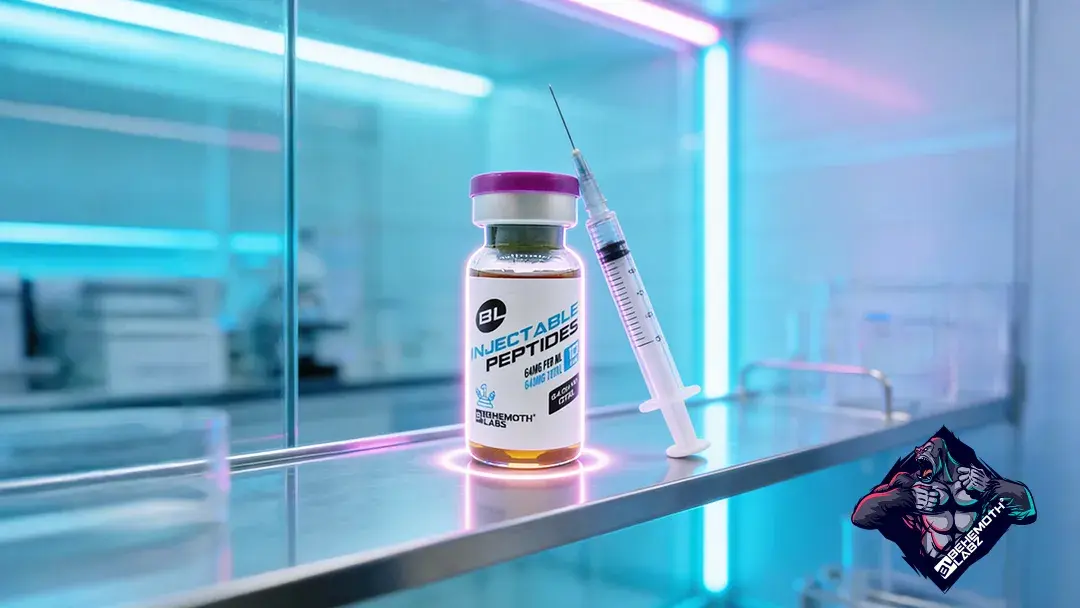
Injectable peptides consist of short amino acid chains. They can be delivered through injection for research into biological signaling and recovery processes. Research the compounds in order to investigate their functions in affecting parameters of muscle building, healing of tissues, and during metabolic processes in study models.
The article presents some of the factors that should be considered by the researchers/customers of BehemothLabz who require high purity of materials in their research.
What are Injectable Peptides?
Injectable peptides are a type of peptide that is available in liquid form for injection. They have the potential to bypass the digestive tract in preclinical models and directly reach the targeted place. The reason behind its use in investigation is immediate research results.
However, researchers must follow the recommended guidelines in each step of the experiments in order to achieve the desired results.
Mechanism of Action
There is no single mechanism of action of peptides. Each peptide works differently in preclinical settings. For instance, there are peptides (GHRP-2 and GHRP-6) that influence the growth hormone secretion patterns in preclinical models. This influence on GH modulates the parameters linked to muscle hypertrophy and adipose tissue reduction.
On the other hand, some peptides may inhibit or activate specific enzymes in preclinical models during experiments. This effect in research models prevents muscle protein breakdown during laboratory trials. In short, the working mechanism of peptides depends on the nature and structure of each peptide.
Types of Injectable Peptides
Injectable peptides, particularly growth hormone (GH)-related ones, are classified by mechanism of action into GHRH analogs and GHRPs. They are further classified on the basis of function in muscle hypertrophy and fat metabolism studies.
Various Peptides Based on Functions:
- CJC-1295 is an analog of the GH-Releasing Hormone. It may extend pulse durations for sustained effects in hormone research.
- IGF-1 LR3 variants activate insulin-like growth factor pathways, driving cell hyperplasia in experiments, and BPC-157 promotes angiogenesis in wound healing models.
- TB-500 has the potential to control actin to cytoskeletal dynamics, and GLP-1 analogues, such as semaglutide analogues, adhere to the investigations of metabolic receptors (Wang et al., 2022).
Some peptides, their key mechanisms, and research focus are given below:
| Types of Peptides | Key Mechanism | Research Focus |
| GHRPs | Ghrelin receptor binding | Fat and muscle modulation |
| IGF-1 LR3 | IGF receptor activation | Cell proliferation |
| TB-500 | Actin sequestration | Cytoskeletal remodeling |
| BPC-57 | Angiogenesis promotion | Tissue repair |
| GH Analogues | Pituitary pulse extension | Hormone regulation |
Research Benefits of Injectable Peptides
- Peptides may modulate muscle fibre hypertrophy by stimulating the GH/IGF axis. Experiments reveal enhanced protein accretion and reduced catabolism in loaded tissues in preclinical models.
- Similarly, early trials also indicate their impacts on fat mobilization through lipolysis gene activation. Lipolysis is the breakdown of large fatty acid molecules into smaller ones.
- Peptides may also speed up tissue regeneration in research subjects. For instance, BPC-157 may repair tendons by curbing inflammation via cytokines like TNF-α.
- Anti-aging probes of peptides show collagen upregulation, improving matrix integrity in preclinical models.
Safety Profile of Injectable Peptides
The profile of peptides is completely safe. They do not cause any severe side effects unless your research follows the recommended guidelines and protocols. But periodic monitoring is suggested to keep your experiment on the right track.
BehemothLabz Products
BehemothLabz’s products possess purity, quality, and integrity. They undergo independent laboratory testing before being launched into the market for experimentation.
Note: Injectable peptides available from BehemothLabz are intended solely for preclinical research and are strictly prohibited for human consumption.
Legal and Regulatory Notes of Peptides
In the FDA, the peptides are referred to as research chemicals. Import/Export adheres to DEA schedules for select analogs, and laboratories are subject to IRB supervision for ethical conduct.
Global standards vary. The EU emphasizes GMP for precursors. Document the chain of custody to audit trails. BehemothLabz adheres to the US Pharmacopoeia and ships domestically.
Conclusion
Injectable peptides are ready-made compounds used in investigational research on non-human research models. They are used to assess their impacts on various physiological pathways in preclinical models. These pathways are linked to muscle hypertrophy and skeletal health. Regarding the legal status of these compounds, they are currently available for laboratory experiments, not for human use.
Frequently Asked Questions
What are injectable peptides?
Injectable peptides are available in liquid form for injection. They tend to bypass the traditional digestive path and provide immediate research results, including muscle hypertrophy and adipose tissue reduction, in preclinical models.
Which is the ideal peptide to inject during laboratory experiments?
Sermorelin, CJC1295, and Ipamorelin are the most considered by researchers to maximize the benefits of muscle growth in preclinical models.
Is it okay to inject peptides in preclinical models?
The security of peptides is related to the type of peptides, the mode of administration, and the dose.
Is a peptide a steroid?
No, peptide is not a steroid. Peptides are small chains of amino acid molecules, whereas steroids are alternatives to testosterone in preclinical models.
Does BehemothLabz test the peptides in the laboratory?
Yes, identity and purity are confirmed by a third party, and COA is provided on a batch-by-batch basis.
What are the legal principles applied in research?
BehemothLabz strictly adheres to the industrial standards and labels their products specifically for research experiments.
References
- Gokhale, A. S., & Satyanarayanajois, S. (2014). Peptides and peptidomimetics as immunomodulators. Immunotherapy, 6(6), 755-774.
- Liu, C., Zhang, Q., Zhu, S., Liu, H., & Chen, J. (2019). Preparation and applications of peptide-based injectable hydrogels. RSC advances, 9(48), 28299-28311.
- Wang, L., Wang, N., Zhang, W., Cheng, X., Yan, Z., Shao, G., Wang, X., Wang, R., & Fu, C. (2022). Therapeutic peptides: current applications and future directions. Signal transduction and targeted therapy, 7(1), 48.
- Xiao, W., Jiang, W., Chen, Z., Huang, Y., Mao, J., Zheng, W., Hu, Y., & Shi, J. (2025). Advances in peptide-based drug development: delivery platforms, therapeutics, and vaccines. Signal transduction and targeted therapy, 10(1), 74.
