





Peptides
Melanotan 2 – Uses, Side Effects, and More
Apr
In a world full of stress, researchers are looking for a compound that can become a cause for relaxation. In Melanotan-2 (MT-2), they might have found the answer. It is a peptide that has caught the attention of scientists worldwide. This article will discuss the roots, properties, and benefits of melanotan-2.
Melanotan 2 is a lab-made peptide. It has been studied in laboratory and animal research for its interaction with melanocortin receptors. These receptors are part of a much larger signaling system. These receptors are involved in pigmentation, energy balance, and neurological pathways.
What Is Melanotan 2?
Melanotan 2 is a synthetic analog of alpha-melanocyte-stimulating hormone (α-MSH). This is a naturally occurring peptide found in biological systems. In experimental settings, it is used to study how melanocortin receptor activation affects different physiological processes.
Researchers are particularly interested in its ability to bind to multiple melanocortin receptor subtypes. These include MC1R, MC3R, MC4R, and MC5R. Each of these are linked with different signaling pathways in animal models.
How Is Melanotan 2 Studied?
As obvious, the compound is only studied In preclinical research. They are checking what happens once it binds to these receptors. Researchers think that it may trigger intracellular pathways involving cyclic AMP (cAMP), a key signaling molecule.
Animal studies allow researchers to track how these pathways influence observable biological responses. They are more interested in responses related to pigmentation and neurochemical activity.
Key Research Findings
1. Activation of Pigmentation Pathways
Probably the most well-documented research area is Melanotan 2’s interaction with MC1R receptors. In animal models, this interaction boosts melanin production. This makes it useful for studying pigmentation mechanisms.
2. Neurological Signaling
Melanotan 2 is also studied for its activity in the central nervous system. In experimental models, activation of MC4R receptors has been observed to change neural signaling patterns. This can be clearly seen in behavior and appetite changes in animal subjects.
3. Energy Balance / Metabolic Signaling
Some animal studies suggest that melanocortin receptor activation may increase energy levels too. Researchers are studying how these can affect metabolic processes.
4. Behavioral Changes
Melanotan 2 exposure in animal models creates:
- Behavioral changes
- Alterations in activity patterns
- and localized physiological reactions
Such findings are documented to understand the full range of biological interactions. These include unintended effects within research environments.
Why Researchers Study Melanotan 2
By studying this compound, researchers can:
- Investigate pigmentation signaling pathways
- Analyze receptor-specific activity in neural systems
- Explore connections between receptor activation and energy regulation
- Understand how multi-receptor compounds influence complex biological networks
A Strictly Research-Based Perspective
All information related to Melanotan 2 comes from laboratory and animal studies. These are conducted under controlled conditions. These studies are designed to examine molecular and cellular mechanisms. They are not to establish real-world applications.
The compound is used solely as a research tool.
Melanotan-1 (MT-1) Vs Melanotan-2 (MT-2)
Both MT-1 and MT-2 peptides have gained attention in research studies. While both affect Melanotan receptors effectively, MT-2 directly stimulates the melanocortin 4 receptor (MC4R). This ability of MT-2 adds to its potential future advantages of giving:
Increased libido
Effective weight loss
On the other hand, Melanotan-1 offers no such benefits.
MT-1, nevertheless, has a one-up in having anti-inflammatory properties which it uses effectively in the treatment of various diseases.
Lastly, when it comes to the side effects, MT-1 provides a much safer and more researched profile as compared to Melanotan-2. MT-2 is a relatively newer compound and may be prone to side effects.
Side Effects
Some potential side effects of Melanotan-2 that have been observed in rodents include:
- Nausea and Vomiting
- Redness or Flushing
- Hyperpigmentation.
- Dizziness
Conclusion
Melanotan-2 is a product with great future prospects. Researchers are studying it for skin tanning capabilities in animal subjects now. Melanotan-2 can stimulate the production of melanin which is essentially a pigment responsible for skin coloration. When you combine its tanning ability with its benefits of weight control, you see a potential peptide with an amazing future. As research advances, Melanotan 2 remains valuable for studying how multiple biological pathways are connected and regulated.
FAQs
Is it Legal?
Melanotan-2 is categorised as a research chemical. Its legality depends on which country you are in. So it's important to understand the laws in your specific jurisdiction.
Does Melanotan 2 cross into the brain in animal studies?
Some laboratory findings suggest that Melanotan 2 can interact with central nervous system receptors. (in animal models). If it is so, it will make it useful for studying neurochemical signaling pathways.
Why is Melanotan 2 important for pigmentation research?
Researchers use Melanotan 2 to study melanin production. This is because its interaction with MC1R receptors in experimental models helps to draw out how pigmentation pathways are regulated at the cellular level.
Where to Buy Melanotan-2?
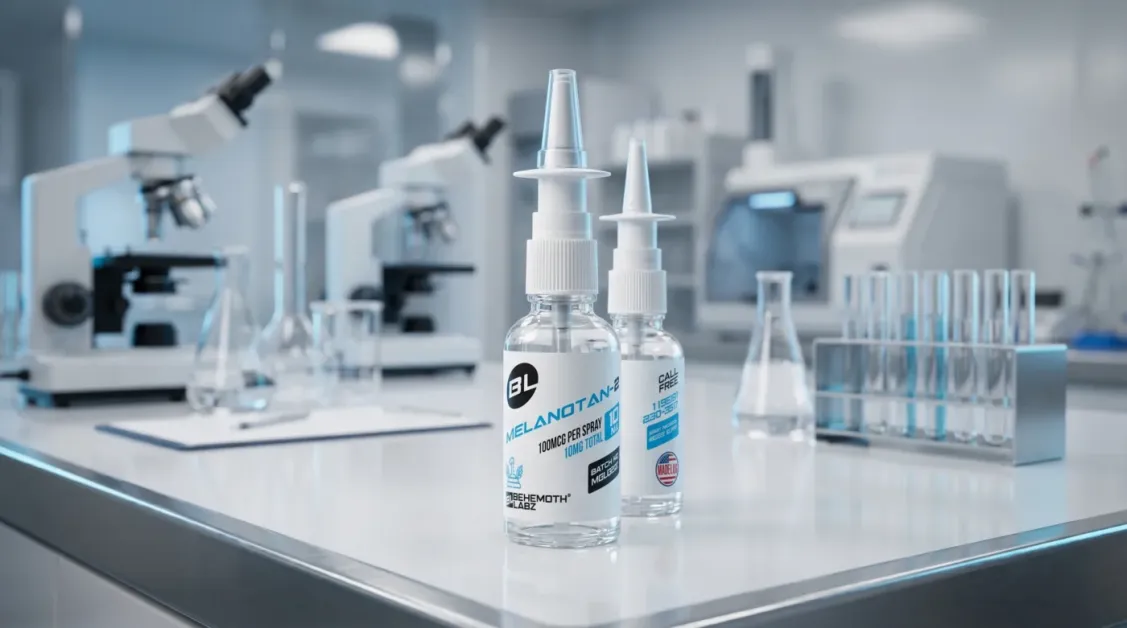
Choose Behemoth Labz for quality-focused research compounds. The Melanotan-2 for sale at this site is developed to meet strict laboratory standards and is tested through independent third-party analysis to verify purity and consistency.
Note: All BehemothLabz products are strictly for LABORATORY AND RESEARCH PURPOSES ONLY. They are not to be used for any human or veterinary purposes.

 SHOP ALL
 Liquids
 Peptide Vials
 Become an Affiliate