


SR9009 vs SR9011: REV-ERB Agonist Comparison for Research
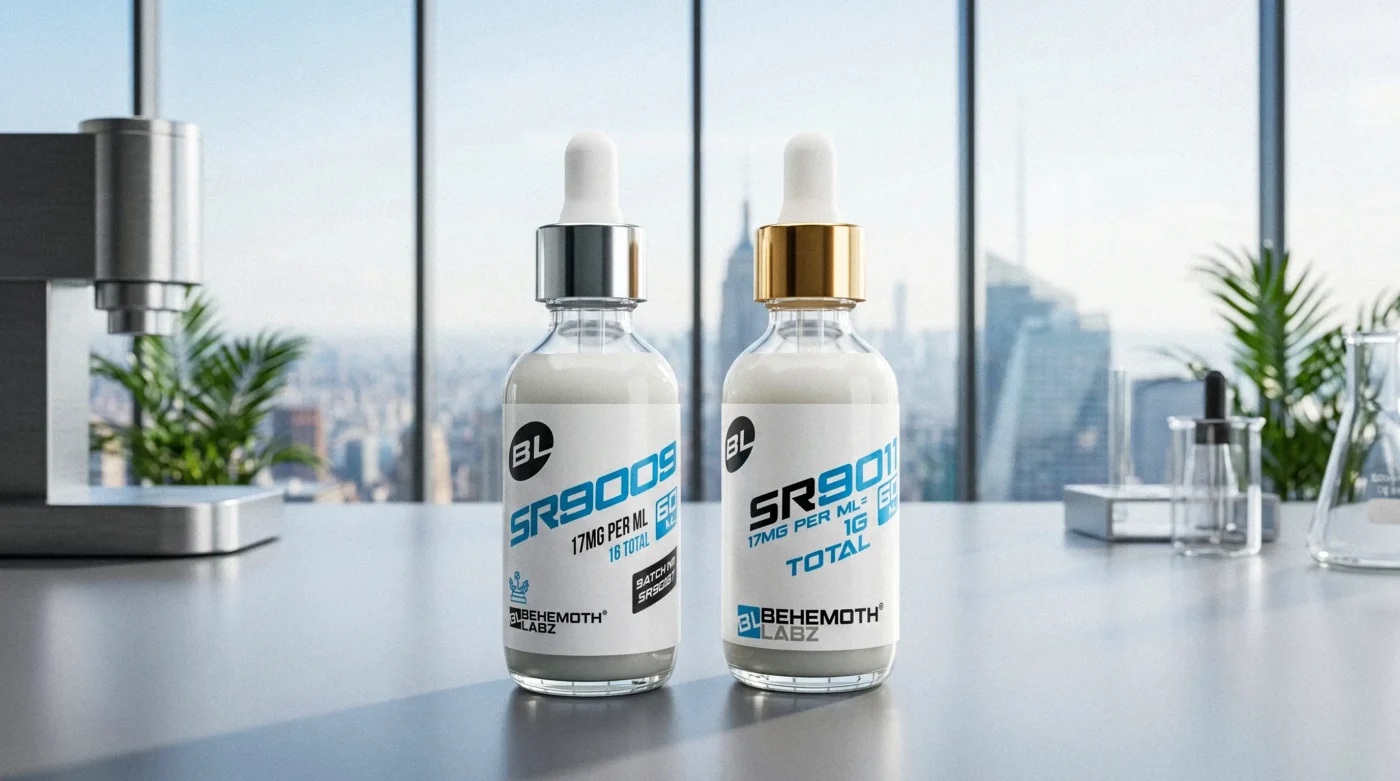
BEHEMOTH LABZ SR9009 vs SR9011

SR9009 and SR9011 are synthetic REV-ERBα/β agonists sharing the same thiophene-pyrrolidine scaffold. SR9009 shows slightly greater potency at REV-ERBα (IC₅₀ 670 nM vs 790 nM); SR9011 shows greater potency at REV-ERBβ (IC₅₀ 560 nM vs 800 nM) and achieves sufficient brain exposure for central clock studies. For most metabolic endpoints, functional differences are subtle. Neither compound is approved for human or veterinary use. All data derive from preclinical and in vitro models only. 

Introduction

REV-ERB agonism has emerged as one of the more productive areas of circadian and metabolic biology research over the past decade. At the centre of that work sit two synthetic rev-erb agonists, SR9009 and SR9011,  that share a structural scaffold but differ in key pharmacological properties, making a direct SR9009 vs SR9011 rev-erb agonist comparison for research a meaningful and increasingly necessary exercise.

Both compounds were developed as pharmacological probes targeting REV-ERBα and REV-ERBβ, nuclear receptors that function as transcriptional repressors within the core clock machinery. In preclinical models, their activation has been associated with alterations across a wide range of biological systems, from circadian behaviour and clock gene expression to mitochondrial metabolism, lipid storage, and immune cell function.

This blog provides a structured research comparison of SR9009 and SR9011 across the primary endpoints used in laboratory investigation: in vitro metabolic studies using human liver microsomes and hepatocyte models, cell viability and cell proliferation assays, mitochondrial function and mitochondrial respiration readouts, gene expression profiling via RNA sequencing, and REV-ERB specificity assessment.

All findings referenced here derive from preclinical animal and in vitro models only. Neither SR9009 nor SR9011 has been evaluated in human clinical trials. Researchers working with either compound should treat all data within a strictly laboratory research framework.

Disclaimer: SR9009 and SR9011 are research compounds not approved by the U.S. Food and Drug Administration (FDA) for human or veterinary use. They are not intended to diagnose, treat, cure, or prevent any disease. These compounds are strictly for laboratory research purposes only.

Disclosure: This content is sponsored by BehemothLabz. All content is for informational and scientific purposes only. No product is endorsed for human use.

What Are REV-ERB Receptors and Why Do SR9009 and SR9011 Matter in Research?

REV-ERBα and REV-ERBβ are nuclear receptors embedded directly within the mammalian circadian oscillator. Both function as transcriptional repressors. Both are expressed across metabolically active tissues. Their role extends beyond timekeeping. They regulate metabolic pathways, immune gene networks, and mitochondrial biogenesis simultaneously. SR9009 and SR9011 were developed as synthetic rev erb agonists to probe these functions pharmacologically.

REV-ERBα and REV-ERBβ Biology

REV-ERBα and REV-ERBβ belong to the nuclear receptor superfamily. They lack a classical activation function domain. Instead, they repress target gene transcription by recruiting the nuclear corepressor NCoR to their ligand-binding domain. Heme is the physiological ligand for both receptors. Heme binding stabilises NCoR recruitment and enhances transcriptional repression.

REV-ERBα is highly expressed in the liver, skeletal muscle, white adipose tissue, the suprachiasmatic nucleus, and immune cells. REV-ERBβ shows a partially overlapping but distinct tissue distribution. Together, they form a secondary stabilising loop within the core clock protein network. This loop represses Bmal1 transcription and sharpens circadian rhythm amplitude and precision.

Beyond the clock, REV-ERBα directly regulates genes involved in fatty acid oxidation, bile acid synthesis, lipid storage, and glucose metabolism. Loss of REV-ERBα in muscle leads to reduced mitochondrial content, impaired oxidative capacity, and upregulated autophagy, as observed in preclinical knockout models.

SR9009 in Preclinical Research: An Overview

SR9009 is a synthetic small-molecule REV-ERB agonist developed at The Scripps Research Institute. SR9009 is also referenced in some research contexts as Stenabolic, though this designation is more commonly associated with consumer supplement marketing than with scientific literature. The compound has no approved supplement or therapeutic status. In HEK293 cotransfection assays, SR9009 demonstrated IC50 values of approximately 670 nM at REV-ERBα, 800 nM at REV-ERBβ, and 710 nM in a Bmal1 promoter-driven luciferase reporter assay (Solt et al., 2012).

In vivo, SR9009 administration in mice treated under diet-induced obesity conditions was associated with reduced fat mass, altered plasma lipid parameters, and changes in glucose homeostasis markers in preclinical experiments. Energy expenditure was elevated. The oxygen consumption rate increased in both diurnal and nocturnal phases. These observations were not attributable to increased locomotor activity.

SR9009 has also been examined in cancer cell line models, where antiproliferative effects have been reported. Whether those effects are REV-ERB-dependent or off-target remains an open and unresolved question in preclinical research. SR9009 is not approved for human or veterinary use. It is not a nutritional supplement. It is strictly a research compound for laboratory use only.

SR9011 in Preclinical Research: An Overview

SR9011 shares the same thiophene-pyrrolidine core scaffold as SR9009 but differs at the final synthetic step. SR9011 demonstrated IC50 values of approximately 790 nM at REV-ERBα and 560 nM at REV-ERBβ. It shows modestly greater potency at REV-ERBβ relative to SR9009. In the Bmal1 promoter assay, SR9011 showed an IC50 of approximately 620 nM (Solt et al., 2012).

A key distinction is brain exposure. SR9011 achieves sufficient plasma and brain penetration to allow evaluation of central clock effects in the suprachiasmatic nucleus (Banerjee et al., 2014). A single injection at the peak of rev erb α expression produced a complete, reversible suppression of locomotor wheel-running activity in mice under constant darkness. Normal activity returned within 24 hours, confirming the effect was pharmacological rather than cytotoxic.

Controversies Around REV-ERB Specificity

The specificity of both SR9009 and SR9011 has been questioned in the preclinical literature. SR9009 has been reported to produce antiproliferative effects in cancer cells in some experimental models. Whether these effects are mediated through rev-erb activity or represent off-target compound activity remains unresolved. The evidence is not consistent across all models or cell types.

For SR9011, off-target activity at non-REV-ERB targets has not been systematically ruled out. Comprehensive off-target screening data remain absent from the published literature. Researchers should not assume that all observed effects of either compound are REV-ERB-dependent. Incorporating REV-ERB knockdown or knockout controls is the most reliable method for distinguishing on-target from off-target activity.

Table 1: SR9009 vs SR9011 REV-ERB Potency Comparison (IC50 values, HEK293 cotransfection assays)

Compound REV-ERBα IC50 REV-ERBβ IC50 Bmal1 Promoter IC50
SR9009 670 nM 800 nM 710 nM
SR9011 790 nM 560 nM 620 nM

Source: Solt et al., 2012

How Should SR9009 and SR9011 Be Structured in a Comparative Research Design?

A well-structured comparative design is essential for generating reliable data from SR9009 and SR9011 experiments. Defining experimental arms, concentration ranges, and cell type selection before initiating work significantly improves the interpretability of in vitro results and vivo studies alike.

Defining Experimental Arms

Each compound requires its own dedicated experimental arm. SR9009 and SR9011 should never be pooled or treated as interchangeable. A parallel design with a minimum of four arms is appropriate for most comparative studies:

  • SR9009 treatment arm
  • SR9011 treatment arm
  • Vehicle control arm matched to SR9009 solvent
  • Vehicle control arm matched to SR9011 solvent

Solvent-matched vehicle controls are non-negotiable. DMSO at higher concentrations can alter mitochondrial function and gene expression. Where REV-ERB specificity is a primary research question, a fifth arm using REV-ERB knockdown or knockout cells should be incorporated.

Concentrations and Exposure Durations

Concentration selection should be anchored to published studies. For cell-based assays, concentrations between 1 µM and 10 µM have been most commonly reported in vitro metabolic studies. Concentrations above 10 µM have been associated with cytotoxic effects in some cancer cells and primary cell models. Optimal concentrations remain model-dependent.

Exposure duration varies by endpoint. Short exposures of 2 to 6 hours are appropriate for acute gene expression studies. Longer exposures of 24 to 72 hours are used for cell proliferation and mitochondrial function experiments.

Cell Type Selection for Comparison

Cell type selection directly impacts the relevance and generalisability of comparative data. The following table summarises the most appropriate cell types for each primary research endpoint.

Table 2: Recommended Cell Types by Research Endpoint

Cell Type Primary Endpoint Rationale
Hepatocytes / HepG2 Metabolic profiling, lipid, and glucose gene expression High REV-ERBα expression; fatty acid oxidation and bile acid synthesis endpoints
Oxidative skeletal muscle cells Mitochondrial metabolism, OCR REV-ERBα is highly expressed; mitochondrial biogenesis is regulated directly
Primary microglia/macrophages Immune gene expression, phagocytosis, mitochondrial respiration Most characterised immune cell model for REV-ERB agonist research
HEK293 cells Reporter assays, receptor binding characterisation Standard for cotransfection assays; not suitable for metabolic endpoints

How Do SR9009 and SR9011 Perform in Human Liver Microsome and Cellular Metabolic Models?

Human liver microsome and hepatocyte models are the primary systems used to characterise the metabolic fate of SR9009 and SR9011 in vitro. All findings from these systems represent in vitro observations only. Direct extrapolation to in vivo metabolism requires independent validation.

Human Liver Microsome (HLM) Incubations

Human liver microsomes are subcellular fractions enriched in cytochrome P450 enzymes and other phase I metabolic machinery. They are the standard starting point for small-molecule metabolic profiling. Standard protocol parameters used in published in vitro metabolic studies are summarised below.

Table 3: Standard HLM Incubation Parameters for SR9009 and SR9011

Parameter Standard Value
Microsomal protein concentration 0.5 to 1.0 mg/mL
Substrate concentration 1 to 10 µM
Cofactor system NADPH regenerating system
Incubation temperature 37°C
Incubation buffer 100 mM potassium phosphate, pH 7.4
Time points T0, T15, T30, T60, T120 minutes

Both SR9009 and SR9011 contain a thiophene ring. Thiophene-containing compounds are known substrates for CYP-mediated oxidation. Researchers should monitor for sulphoxide and epoxide metabolite formation. Reagents for HLM workflows have been sourced from Thermo Fisher Scientific and Thermo Scientific in published studies. Researchers should follow the manufacturer's instructions for microsomal protein handling and storage.

Cell-Based Metabolic Incubations in Hepatocytes

Primary human hepatocytes and hepatocyte-derived cell lines provide a more complete metabolic environment than HLM alone. They retain phase I and phase II metabolic activity, transporter expression, and a degree of gene regulatory responsiveness not present in microsomal systems.

In hepatocyte systems, changes in the expression of genes, including Fasn and Scd1, have been observed following REV-ERB agonist treatment in preclinical experiments. Decreased lipogenesis signals are detectable in hepatocyte models but not in HLM alone. This makes hepatocytes the preferred model when metabolic gene expression is a co-primary endpoint alongside metabolite identification.

Time-Course Sample Collection for Metabolite Profiling

A minimum five-point time course is recommended for both HLM and hepatocyte systems. Samples should be quenched with ice-cold acetonitrile or methanol at each time point. Internal standards should be added at the quench step to normalise for extraction efficiency and instrument response variation.

For gene expression co-endpoints, separate sample aliquots should be collected for RNA extraction at each time point. This allows correlation between metabolite profiles and transcriptional responses across the same experimental timeline.

How Is LC-HRMS Used to Identify SR9009 and SR9011 Metabolites?

LC-HRMS is the primary analytical platform for metabolite identification in SR9009 and SR9011 preclinical research. It combines chromatographic separation with high-resolution, accurate mass detection. Instruments from Agilent Technologies and Thermo Fisher Scientific are among the most widely used platforms in published metabolite identification workflows.

LC-HRMS Analysis on Incubation Extracts

Chromatographic separation is typically performed on a reverse-phase C18 column using a gradient mobile phase system with water and acetonitrile with 0.1% formic acid. Key instrument parameters relevant to SR9009 and SR9011 are summarised below.

Table 4: LC-HRMS Instrument Parameters for SR9009 and SR9011 Metabolite Identification

Parameter SR9009 SR9011
Molecular Formula C20H24ClN3O4S C23H31ClN4O3S
Molecular Weight 437.9 g/mol 479.0 g/mol
CAS Number 1379686-30-2 1379686-29-9
Mass accuracy target Within 5 ppm Within 5 ppm
Minimum resolution 25,000 FWHM 25,000 FWHM

Product Ion Scans for Structural Assignment

Product ion scans are acquired to support structural assignment of candidate metabolites. Key fragmentation regions to monitor for SR9009 and SR9011 include the thiophene-containing fragment, the pyrrolidine ring system, the chlorobenzyl group (which provides a diagnostic chlorine isotope pattern), and the urea or carbamate linker region, which differs between the two compounds and can confirm identity in mixed-matrix samples.

Validation of Candidate Metabolites by Targeted MS/MS

Targeted MS/MS validation confirms candidate metabolite identity before downstream reporting. The workflow involves selecting top candidates by in vitro abundance, defining specific precursor-to-product ion transitions, and reanalysing extracts to confirm retention time, precursor mass, fragment ion ratios, and isotope patterns across replicate injections. Statistical analysis of peak area ratios should be applied to confirm that abundance rankings reflect genuine differences.

How Are SR9009 and SR9011 Metabolites Prioritised and Mapped?

Metabolite prioritisation and mapping convert raw LC-HRMS data into an actionable research output. Without a systematic prioritisation framework, researchers risk investing resources in minor or artefactual metabolites.

Prioritising Metabolites by In Vitro Abundance

Major metabolites are defined as those contributing greater than 10% of the total metabolite-related signal in the incubation extract. Minor metabolites fall below this threshold. Vitro results from HLM and hepatocyte systems should be ranked separately. Metabolites that appear in both systems with consistent abundance rankings carry greater confidence than those detected in only one model.

Mapping Metabolic Modifications to Molecular Fragments

Each validated metabolite is assigned a mass shift relative to the parent compound. Common mass shifts observed in thiophene-pyrrolidine compounds are shown below.

Table 5: Common Metabolic Modifications Observed in SR9009 and SR9011 In Vitro Studies

Mass Shift Modification Type Structural Region
+16 Da Monohydroxylation Thiophene ring, pyrrolidine, linker region
+32 Da Dihydroxylation / Sulphoxidation Thiophene sulphur; secondary hydroxylation sites
+14 Da Oxidative desaturation Pyrrolidine ring
-36 Da Dechlorination + hydroxylation Chlorobenzyl group
+176 Da Glucuronide conjugation Phase II: hepatocyte systems only

Proposing Diagnostic Metabolites for Screening

Diagnostic metabolites are candidates for use in anti-doping drug test development. Both SR9009 and SR9011 appear on prohibited substance lists. Proposed diagnostic metabolites should be framed as candidates for further investigation only. They are not confirmed screening markers until validated in appropriate biological matrix studies with full method validation, including sensitivity, specificity, and matrix effects data.

How Do SR9009 and SR9011 Compare in Cell Viability and Proliferation Assays?

Cell viability and cell proliferation assays establish the concentration boundaries within which each compound can be studied without confounding cytotoxic effects. Published studies indicate that both SR9009 and SR9011 can affect cell viability and proliferation in a concentration-dependent manner. Findings are not consistent across all models.

ATP-Based Cell Viability Assays

ATP luminescence assays are the most widely used method for assessing cell viability in SR9009 and SR9011 research. ATP levels correlate directly with the number of metabolically active cells. A severe reduction in ATP levels relative to vehicle control indicates cytotoxicity or a marked decrease in metabolic activity.

Because both SR9009 and SR9011 alter mitochondrial metabolism, a decrease in ATP levels may reflect altered mitochondrial function rather than cell death. Orthogonal confirmation with a membrane integrity assay is therefore essential before interpreting ATP reduction as cytotoxicity.

Live/Dead Staining for Viability Confirmation

Fluorescent live/dead staining provides an orthogonal measure of cell viability based on membrane integrity. This distinction is important because ATP-based assays alone may overestimate cytotoxicity in compounds that alter mitochondrial respiration. Calcein-AM and ethidium homodimer-based kits are commonly applied. Discordance between ATP reduction and membrane integrity data is most commonly observed at intermediate compound concentrations in cancer cells.

Cell Proliferation Kinetics: Counting, S-Phase, and Colony Formation

Direct cell counting across multiple time points measures growth rate changes over time. S-phase analysis by flow cytometry using BrdU or EdU labelling quantifies the proportion of cells actively synthesising DNA. Colony formation assays assess long-term clonogenic survival following short compound exposure. A compound that reduces colony formation without reducing short-term viability may be exerting effects through mechanisms distinct from acute cytotoxicity. REV-ERB knockout or knockdown arms should be incorporated wherever feasible to distinguish on-target from off-target antiproliferative effects.

What Do Mitochondrial Assays Reveal About SR9009 vs SR9011?

Mitochondrial endpoints are among the most informative readouts in SR9009 and SR9011 comparative research. REV-ERBα activation directly influences mitochondrial biogenesis, mitochondrial metabolism, and mitochondrial respiration (Woldt et al., 2013). Both compounds have been shown to alter mitochondrial function in preclinical models.

Basal and Stimulated Oxygen Consumption Rates

The oxygen consumption rate is the primary quantitative readout of mitochondrial respiration in live cell systems. Key OCR parameters to report in comparative experiments include basal respiration, ATP-linked respiration, maximal respiration, spare respiratory capacity, and non-mitochondrial respiration. Reporting all five parameters rather than OCR alone produces a mechanistically interpretable dataset.

Seahorse Assay Design for ATP-Linked Respiration

The Seahorse XF analyser measures both the oxygen consumption rate and the extracellular acidification rate simultaneously. This dual readout allows assessment of both mitochondrial respiration and glycolytic activity within the same experiment. SR9011 treatment in primary microglia resulted in a marked decrease in ATP-linked respiration and a significant difference in maximum substrate oxidation relative to vehicle control (Wolff et al., 2020). Whether SR9009 produces an equivalent pattern in matched cell systems has not been directly confirmed in published studies.

The standard Seahorse mitochondrial stress test for SR9009 and SR9011 comparative experiments uses the following inhibitor sequence: oligomycin (1 to 2 µM) to inhibit ATP synthase, FCCP at optimised concentration to uncouple the mitochondrial membrane, and rotenone (0.5 µM) plus antimycin A (0.5 µM) to inhibit complexes I and III. Results should be normalised to cell number or total protein content. Bio-Rad protein assay reagents are commonly used for total protein normalisation.

Mitochondrial Membrane Potential

JC-1 is the most widely used fluorescent dye for membrane potential assessment. It provides a ratiometric measure of membrane potential independent of mitochondrial mass. MitoTracker Red and TMRE are alternative dyes used in some published studies. Membrane potential measurements should be performed at the same time points used for OCR measurements to allow direct correlation.

Reactive Oxygen Species Quantification

MitoSOX Red is the standard fluorescent probe for mitochondrial superoxide detection. CellROX reagents from Thermo Fisher Scientific are used for total cellular ROS quantification. A compound that reduces OCR and membrane potential while simultaneously elevating ROS production is producing a pattern consistent with mitochondrial dysfunction rather than regulated metabolic remodelling. No published head-to-head ROS comparison between SR9009 and SR9011 in a matched cell system has been identified in the available preclinical literature.

ATF4 and Stress Marker Immunoblotting

ATF4 immunoblotting identifies whether mitochondrial effects are driving a broader integrated stress response. The standard workflow involves cell lysis in RIPA buffer, total protein quantification using Bio-Rad or equivalent assay reagents, SDS-PAGE, transfer to PVDF membrane, and detection by enhanced chemiluminescence. Additional stress markers worth including alongside ATF4 are phospho-eIF2α, CHOP, and HSP70. Researchers should follow the manufacturer's instructions for PVDF membrane activation, blocking, and antibody incubation conditions.

What Does RNA Sequencing Reveal About SR9009 and SR9011 Gene Expression Profiles?

RNA sequencing provides an unbiased, genome-wide view of gene expression changes following compound treatment. It allows researchers to assess the full breadth of transcriptional responses driven by each compound and to identify compound-specific transcriptional signatures.

RNA Sequencing on Treated and Control Samples

A minimum of three biological replicates per treatment group is required for statistical power in differential gene expression analysis. Four treatment groups are required for a direct comparison: SR9009 treatment, SR9011 treatment, and a matched vehicle control for each compound. A minimum of 20 million mapped reads per sample is appropriate for detecting changes in moderately expressed genes. For mouse genome-based experiments, alignment to the current GRCm39 reference assembly is standard.

Differential Gene Expression Analysis for REV-ERB Targets

An adjusted p-value below 0.05 using Benjamini-Hochberg false discovery rate correction is the standard threshold for DEG analysis. A minimum fold change of 1.5 is appropriate for exploratory analyses. Canonical REV-ERB target genes expected to appear in regulated gene sets from SR9009 and SR9011-treated samples are summarised below.

Table 6: Canonical REV-ERB Target Genes in SR9009 and SR9011 Transcriptomics Studies

Gene Direction Tissue Functional Relevance
Bmal1 Repressed Multiple Primary REV-ERB transcriptional target; core clock gene
Npas2 Suppressed Hypothalamus In vivo efficacy marker for REV-ERB agonism
Srebf1 Suppressed Liver Hepatic REV-ERB-responsive gene marker
Fasn / Scd1 Decreased Liver Lipogenic genes; decreased lipogenesis signal
Cpt1b Elevated Skeletal muscle Rate-limiting enzyme for fatty acid oxidation
Nampt Suppressed Liver NAD-dependent signalling pathway regulation
Ppargc-1α Altered Skeletal muscle Regulating mitochondrial biogenesis; connects REV-ERB to skeletal muscle oxidative capacity

Sources: Solt et al., 2012; Woldt et al., 2013; Wolff et al., 2020

qPCR Validation of Key Transcripts

qPCR validation is mandatory following RNA-seq discovery. Reference gene stability must be confirmed empirically in the specific cell type and treatment condition used. GeNorm or NormFinder algorithms should be applied to identify stable reference genes before proceeding with relative quantification. Genes showing compound-specific transcriptional signatures in RNA seq data should be validated in an independent biological replicate set before mechanistic conclusions are drawn.

How Is REV-ERB Specificity Assessed for SR9009 and SR9011?

Specificity assessment is non-negotiable in SR9009 and SR9011 research. Without it, observed effects cannot be confidently attributed to Rev-erb activity rather than off-target compound interactions.

siRNA knockdown or CRISPR knockout of REV-ERBα and REV-ERBβ are the most direct methods for establishing on-target dependence. Effects that persist in receptor-depleted cells are off-target. Luciferase reporter assays using a Bmal1 promoter-driven construct in HEK293 cells provide a clean, quantitative measure of REV-ERB transcriptional activity for direct potency comparison between the two compounds.

Cistrome overlap analysis intersects DEG lists from RNA seq data with published ChIP-seq REV-ERB binding datasets. Genes present in both the DEG list and the REV-ERB cistrome are strong candidates for on-target effects. Genes outside the cistrome require further investigation. SR9011 had no effect on anxiety-like behaviour in REV-ERBβ-null mice, confirming its anxiolytic activity was receptor-mediated (Banerjee et al., 2014).

How Are Proteomics and Multi-Omics Data Integrated for SR9009 and SR9011 Research?

Transcriptomic data captures gene expression changes but does not directly measure protein abundance. Targeted mass spectrometry-based proteomics allows quantification of specific metabolic enzyme panels relevant to REV-ERB agonist biology, including fatty acid oxidation enzymes and mitochondrial biogenesis regulators. Selected reaction monitoring or parallel reaction monitoring workflows provide the sensitivity required for low-abundance metabolic enzymes in complex cell lysates.

Joint pathway enrichment analysis across RNA-seq and proteomics datasets identifies biological processes consistently regulated at both the transcript and protein levels. Tools including KEGG, Reactome, and STRING are applied for this purpose in preclinical research contexts, alongside gene ontology enrichment analysis. Pathways showing concordant regulation across both data layers carry greater mechanistic confidence than those supported by transcriptomics alone. Discordance between layers should be reported transparently.

What Statistical and Analytical Standards Apply to SR9009 and SR9011 Comparative Research?

An adjusted p-value below 0.05 using Benjamini-Hochberg false discovery rate correction is the standard threshold for DEG analysis. A minimum fold change of 1.5 to 2.0 should be defined before analysis begins and reported in all publications. Pathway enrichment results should be interpreted as correlational findings only. Enrichment confirms that a set of genes with shared function is regulated. It does not confirm that the pathway is mechanistically activated or inhibited.

Where SR9009 and SR9011 are tested in combination with other compounds, synergy should be quantified using Bliss independence, Loewe additivity, or HSA scoring. Combination studies are appropriate only where a clear scientific rationale for co-administration exists within the preclinical research context.

What Are the Risks and Limitations of SR9009 and SR9011 Research?

This section is mandatory reading before working with SR9009 or SR9011 in any laboratory setting.

Handling Precautions

SR9009 and SR9011 should be handled by trained laboratory personnel only in a controlled research environment. Use appropriate PPE at all times. Avoid direct skin contact or inhalation of any reconstituted solution. All procedures should be performed in a certified biosafety cabinet or fume hood. Waste disposal must follow institutional and local chemical waste regulations.

Exposure Risks

SR9009 and SR9011 are synthetic small-molecule REV-ERB agonists investigated for their effects on circadian, metabolic, and mitochondrial pathways in preclinical models. No human safety data exist for either compound. SR9009 and SR9011 are not approved by the FDA for human or veterinary use. They are not nutritional supplements. They are strictly research compounds for laboratory use only.

Storage

Store SR9009 and SR9011 at -20°C in a dry, dark environment. Protect from light, heat, and moisture. Follow supplier-provided storage guidelines for each lot. Reconstituted solutions should be prepared fresh where possible.

Toxicity and Data Limitations

No chronic toxicity data exist for SR9009 or SR9011. All findings derive from short-duration preclinical models only. Off-target and mitochondrial toxicity signals have been noted in the literature and remain unresolved. Long-term safety, genotoxicity, and reproductive toxicity have not been characterised in any published study.

Off-Target and Specificity Uncertainty

Published evidence raises questions about REV-ERB-independent activity for both compounds. Antiproliferative effects observed in cancer cells in some experimental models have not been consistently attributed to rev erb activity. Researchers should account for this uncertainty when designing experiments and interpreting results.

What Are the Doping Detection and Translational Research Implications of SR9009 and SR9011?

Both SR9009 and SR9011 have been identified as substances of concern in anti-doping research contexts. Their inclusion reflects concern about potential misuse in athletic contexts.

Metabolites for Anti-Doping Screening Research

Metabolite candidates identified through LC-HRMS-based in vitro metabolic studies are the primary targets for drug test method development. Proposed diagnostic metabolites should be framed as candidates for further investigation only. A drug test method based on these candidates requires full analytical validation before regulatory application.

Translational Limitations from In Vitro to In Vivo Systems

Concentrations used in in vitro metabolic studies frequently exceed those achievable in vivo. Species differences between the mouse genome and human CYP enzyme expression affect metabolite profile relevance. Cell model limitations, including the absence of intact tissue architecture, further constrain the extrapolation of in vitro results to whole-organism contexts.

Preclinical Excretion Modelling

Microsomal stability data combined with physicochemical property modelling can generate predicted clearance and half-life estimates. These models are research tools. They do not substitute for direct in vivo pharmacokinetic studies. All excretion modelling outputs should be presented as preliminary estimates subject to experimental validation.

What Do the Comparative Findings Reveal?

REV-ERB-Dependent vs REV-ERB-Independent Effects

Both compounds activate REV-ERBα and REV-ERBβ and alter clock gene expression, circadian behaviour, and metabolic gene networks in preclinical models. However, antiproliferative effects observed in cancer cells and some mitochondrial toxicity signals have not been fully attributed to REV-ERB engagement. Researchers should not present findings as REV-ERB-dependent without genetic control data to support that conclusion.

Mitochondrial Dysfunction vs Transcriptional Effects

REV-ERBα directly regulates genes governing skeletal muscle oxidative capacity and regulating mitochondrial biogenesis (Woldt et al., 2013). Some mitochondrial effects may therefore be primary transcriptional consequences of REV-ERB activation. Others may represent downstream responses to circadian disruption. Disentangling these requires time-course designs with tissue-specific genetic controls.

Comparative Preclinical Safety Signals

SR9009 and SR9011 show broadly similar preclinical safety profiles in published studies. Both produce reversible effects at acute doses in rodent models. Neither has been evaluated for chronic toxicity. Direct head-to-head safety comparison in matched systems represents a significant gap in the current evidence base.

Conclusions and Research Recommendations for SR9009 and SR9011

SR9009 and SR9011 remain two of the most characterised synthetic rev erb agonists available for preclinical research. Both activate nuclear receptors embedded in the mammalian circadian oscillator. Both alter clock genes, metabolic pathways, mitochondrial function, and gene expression in preclinical models. Findings are not consistent across all models. Data remains limited in several important areas.

For researchers designing comparative studies, the following best practices apply:

  • Run SR9009 and SR9011 in parallel under identical conditions. Do not rely on cross-study comparisons
  • Include solvent-matched vehicle controls and REV-ERB genetic controls in all mechanistic experiments
  • Apply multi-timepoint designs for all gene expression and metabolic endpoints
  • Validate RNA seq data by qPCR before drawing mechanistic conclusions
  • Report exact concentrations, solvent, exposure durations, and cell type in all publications
  • Frame all findings within a strictly preclinical research context

Neither compound is approved for human or veterinary use. All research must remain within a laboratory setting.

Frequently Asked Questions

  1. What is the difference between SR9009 and SR9011 in preclinical research?

SR9009 and SR9011 share the same core scaffold but differ in their terminal functional group. SR9011 shows greater potency at REV-ERBβ. SR9011 also achieves sufficient brain exposure for central clock studies in vivo. SR9009 shows slightly greater potency at REV-ERBα. In practice, functional differences across most preclinical endpoints are subtle. Running both compounds in parallel is preferable to relying on either alone.

  1. Are SR9009 and SR9011 approved for human use?

No. Neither SR9009 nor SR9011 is approved by the FDA for human or veterinary use. Both are strictly research compounds for laboratory use only. They are not nutritional supplements. They are not intended to diagnose, treat, cure, or prevent any disease.

  1. What cell types are used in SR9009 and SR9011 research?

Hepatocytes and liver-derived lines are used for metabolic endpoints. Oxidative skeletal muscle cells are used for mitochondrial metabolism studies. Primary microglia are the most characterised immune cell model. HEK293 cells are used for reporter assays and receptor binding characterisation. Cell type selection should be matched to the specific research endpoint.

  1. What does REV-ERB specificity mean in SR9009 and SR9011 research?

REV-ERB specificity refers to whether observed compound effects are mediated through activation of REV-ERBα or REV-ERBβ. Effects that disappear in REV-ERB knockout or knockdown models are on-target. Effects that persist are off-target. Specificity assessment using genetic controls is essential before any mechanistic conclusion can be drawn.

  1. Why are mitochondrial assays important in SR9009 vs SR9011 studies?

REV-ERBα directly regulates genes governing skeletal muscle oxidative capacity and regulating mitochondrial biogenesis (Woldt et al., 2013). Both compounds alter mitochondrial respiration in preclinical models. Seahorse OCR measurements, membrane potential assays, and ROS quantification provide mechanistic insight into whether observed effects reflect regulated metabolic remodelling or mitochondrial dysfunction.

  1. What are the main limitations of SR9009 and SR9011 research to date?

No chronic toxicity data exist for either compound. Off-target activity has not been fully characterised. Most comparative data come from single-cell-type studies under non-identical conditions. Translational gaps between in vitro results and vivo studies remain significant. Findings should not be extrapolated beyond the specific preclinical model in which they were observed.

What to Look for in a Supplier when buying research-grade SR9009 or SR9011?

If you want to Buy SR9009 or you need SR9011, check that every batch is independently third-party tested for purity and identity. A Certificate of Analysis should be available for each lot. You can try trusted sites like BehemothLabz, where all compounds are sold strictly for preclinical and in vitro research use.

Note: All BehemothLabz products are strictly for LABORATORY AND RESEARCH PURPOSES ONLY. They are not to be used for any human or veterinary purposes.

Disclosure: Sponsored by BehemothLabz. This content is for informational purposes only and does not constitute an endorsement of any product for human use.

References

  1. Solt LA, Wang Y, Banerjee S, et al. Regulation of circadian behaviour and metabolism by synthetic REV-ERB agonists. Nature. 2012;485(7396):62-8. https://doi.org/10.1038/nature11030
  2. Banerjee S, Wang Y, Solt LA, et al. Pharmacological targeting of the mammalian clock regulates sleep architecture and emotional behaviour. Nat Commun. 2014;5:5759. https://doi.org/10.1038/ncomms6759
  3. Wolff SE, Wang XL, Jiao H, et al. The Effect of Rev-erba Agonist SR9011 on the Immune Response and Cell Metabolism of Microglia. Front Immunol. 2020;11:550145. https://doi.org/10.3389/fimmu.2020.550145
  4. Woldt E, Sebti Y, Solt LA, et al. Rev-erb-a modulates skeletal muscle oxidative capacity by regulating mitochondrial biogenesis and autophagy. Nat Med. 2013;19(8):1039-46. https://doi.org/10.1038/nm.3213

ATTENTION: SR9009 and SR9011 are strictly for laboratory and research purposes only. Not for human or veterinary use. Not approved by the FDA. Keep out of reach of children. For research use by qualified professionals only.

Leave a Reply