



SARMs
Is Ostarine a Steroid?
Jan
Ostarine sparks debate in research circles. Many wonder whether it counts as a steroid due to its muscle-related reputation or a SARM. To uncover this mystery, this blog explores the true nature of Ostarine.
What is Ostarine?
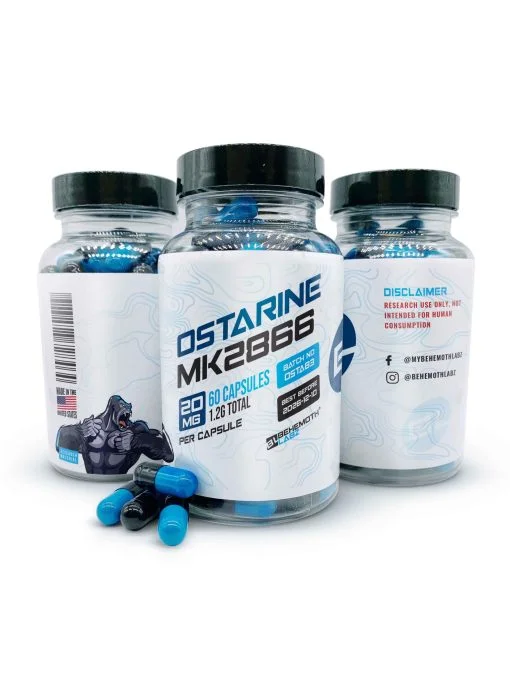
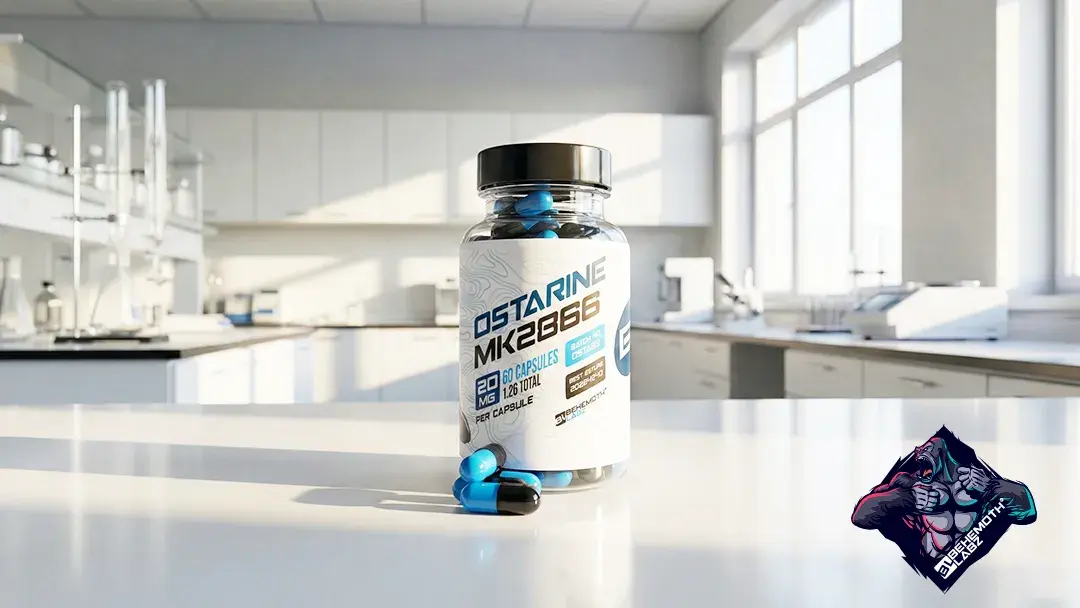
Ostarine is a selective androgen receptor modulator (SARM), known as MK-2866 or Enobosarm. In preclinical models, developers developed SARMs that are specific to certain tissues, including muscle and bone. It was first synthesized in the late 2000s. It is a potential research tool for conditions involving muscle loss. Its chemical structure mimics certain hormone pathways. Nonetheless, it does not work in a similar manner to conventional steroids.
It binds selectively to androgen receptors. This selectivity sets it apart from steroids. Studies highlight its development for preclinical exploration only. Purity matters in lab settings. BehemothLabz supplies high-quality research-grade Ostarine for such purposes in your preclinical research work.
What are Anabolic Steroids?
Anabolic steroids are synthetic compounds derived from naturally occurring testosterone. They are used for muscle hypertrophy, skeletal health, and adipose tissue reduction. They influence the protein synthetic process once entered the system. Besides, anabolic steroids also cause androgenic effects.
Is Ostarine a Steroid?
Ostarine is not a traditional anabolic steroid. It is a SARM. It mimics the muscle-building effects of steroids in research models. Here is a detailed overview of why Ostarine is not a steroid.
- Different Origin: Ostarine is laboratory-made, not derived from a hormone. On the other hand, anabolic steroids are derived and developed from hormones, such as testosterone.
- Structural Differences: Anabolic steroids contain four carbon rings in their structure. On the other hand, Ostarine lacks this structure and belongs to the SARM class.
- Difference in Selective Nature of Binding: Ostarine selectively binds to androgen receptors in muscle and skeletal tissues in preclinical models. On the other hand, anabolic steroids may bind to androgen receptors anywhere.
Differences That Show Ostarine Is Not a Steroid
| Aspects | Ostarine (SARM) | Steroids (Testosterone) |
| Chemical formula | C19H14F3N3O3 | C19H28O2 |
| Structure | It has a quinolone backbone that enables selective binding. | It features a four-ring cyclopentanoperhydrophenanthrene core. |
| Molecular weight | 389.33 g/mol | 288.431 g/mol |
| Receptor binding | It has a high binding affinity for muscle receptors. | Steroids flood androgen receptors, activating gene growth. |
| Selectivity | They are highly receptor selective. | They are less receptor selective. |
| Metabolism pathways | Ostarine undergoes phase I oxidation and then glucuronidation, and its major metabolites include M1 and M2. | It favors 17-keto reduction or aromatization. |
Benefits or Research Applications of Ostarine
Ostarine plays a key role in preclinical research. Scientists use it to study muscle and bone responses without broad hormone effects in preclinical models.
Muscle Wasting
Scientists experiment on Ostarine in cancer-induced cachexia rats. Cancer cachexia is the condition of muscle loss. The experiment demonstrates the potential for lean development of mass and strength in rat models. Researchers measure fiber size and enzyme activity in leg muscles in preclinical models.
Bone Health Studies
Ostarine strengthens bone in preclinical setups. It may build bone density and prevent bone loss in animal models. Fracture-healing tests in orchiectomized rats are compared with testosterone, which supports bone formation in osteoporosis rat models. Rodent assays check balance, gait, and fall prevention via muscle-bone links.
Tissue Selectivity Tests
Labs use Ostarine to probe androgen receptor binding in muscle versus prostate cells. It activates genes for growth mainly in targeted areas in research models. Enzyme assays track changes in aerobic capacity in laboratories.
Vascularization studies show increased capillarization in the muscles of treated animals. This confirms the compound's non-steroidal properties. Scientists use Ostarine to model selective receptor activation in preclinical muscle cells, bone-healing pathways, or sarcopenia in animals. The preclinical data in rodents investigates the dose-response curve, and scientists compare it to steroids during binding affinity tests.
Legality
Ostarine is not approved by the FDA for use outside of research, and its resellers, such as BehemothLabz, market it only for lab use. EU regulations mirror research-only status, patents expired, allowing synthesis for science.
Common Misconceptions
Ostarine is mistakenly referred to as a steroid because of its anabolic image. Whereas steroids have a four-ring structure. The selective mechanism is explained by research: "Ostarine is comparable to steroids. Lab evidence shows distinct profiles, and BehemothLabz promotes accurate information for researchers.
Conclusion
Ostarine is a non-steroidal SARM developed for preclinical studies on muscle wasting. Its use in humans as a muscle-building performance enhancer is prohibited by law and in sports. It works by selectively targeting androgen receptors to build lean mass in animal models. Its side effects are less steroid-like; studies are underway to establish its preclinical advantages and side effects in preclinical models.
FAQs
What does Ostarine do in preclinical models?
Ostarine (and enobosarm in particular) has the potential to stimulate muscle growth and improve performance in preclinical models.
Does Ostarine have an impact on testosterone?
Preclinical studies indicate Ostarine exhibits limited androgenic properties. It means it has less influence on testosterone development and balance in research models.
How long does Ostarine stay in research animals?
The detection windows for Ostarine, LGD-4033, and Andarine range from 3 days to 6 weeks in animal models.
Where is Ostarine sold online?
You can buy research-grade Ostarine from BehemothLabz. It provides detailed COAs for each batch and the best-quality SARMS at the most reasonable prices.
References
- Zilbermint, M.F. and Dobs, A.S., 2009. Nonsteroidal selective androgen receptor modulator Ostarine™ in cancer cachexia. Future Oncology, 5(8), pp.1211-1220.
- Hoffmann, D.B., Komrakova, M., Pflug, S., von Oertzen, M., Saul, D., Weiser, L., Walde, T.A., Wassmann, M., Schilling, A.F., Lehmann, W. and Sehmisch, S., 2019. Evaluation of ostarine as a selective androgen receptor modulator in a rat model of postmenopausal osteoporosis. Journal of bone and mineral metabolism, 37(2), pp.243-255.
- Roch, P.J., Henkies, D., Carstens, J.C., Krischek, C., Lehmann, W., Komrakova, M. and Sehmisch, S., 2020. Ostarine and Ligandrol improve muscle tissue in an ovariectomized rat model. Frontiers in endocrinology, 11, p.556581.
- Komrakova, M., Furtwängler, J., Hoffmann, D.B., Lehmann, W., Schilling, A.F. and Sehmisch, S., 2020. The selective androgen receptor modulator ostarine improves bone healing in ovariectomized rats. Calcified tissue international, 106(2), pp.147-157.
- Böker, K.O., Komrakova, M., Fahrendorff, L., Spelsberg, B.R., Hoffmann, D.B., Schilling, A.F., Lehmann, W., Taudien, S. and Sehmisch, S., 2023. Treatment of osteoporosis using a selective androgen receptor modulator ostarine in an orchiectomized rat model. Endocrine, 81(3), pp.579-591.
