




SARMs
MK 677 VS Testosterone Scientific Comparison
Jan
Several compounds have shown promise for influencing muscle growth, strength, and overall performance in preclinical models. Two options, including MK-677 (Ibutamoren) and Testosterone, are currently under active research in the laboratory. In this blog, we are going to immerse ourselves in these compounds so we can understand their effects in the research experiments.
What is MK-677?
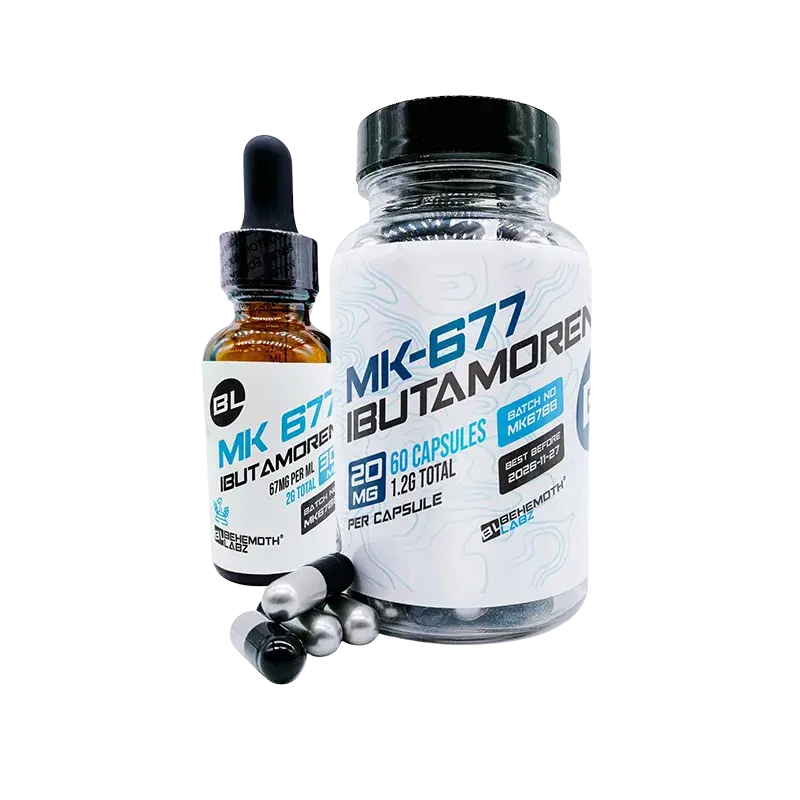
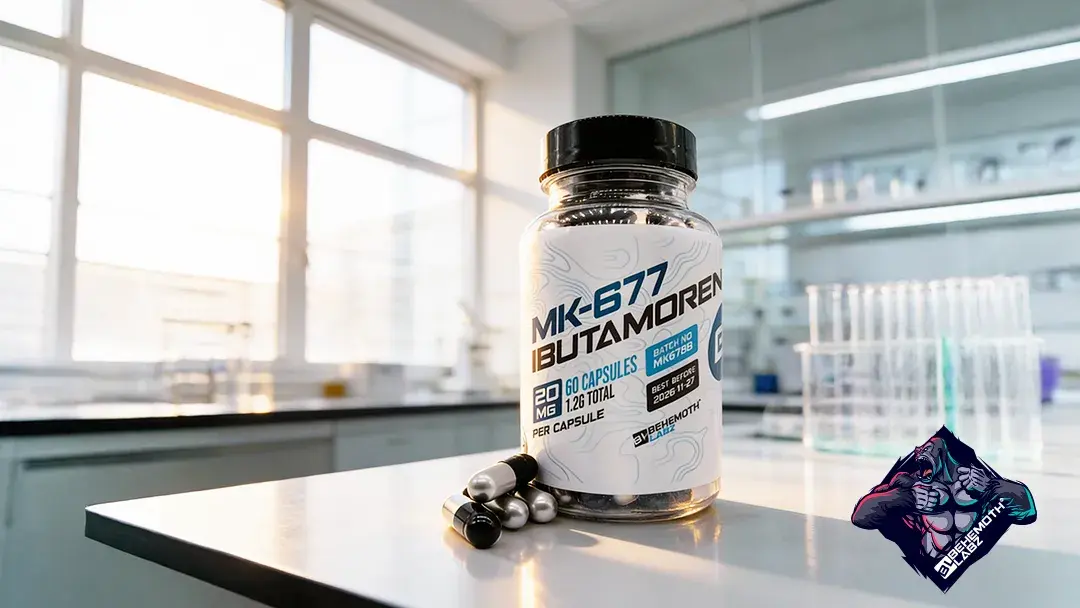
MK-677 is also referred to as Ibutamoren. It is an artificial growth hormone secretagogue developed in the laboratory that imitates the growth hormone ghrelin. In preclinical studies, it stimulates the pituitary gland to release growth hormone (GH).
This increase in GH also affects the pathways linked to insulin-like growth factor 1 (IGF-1) levels. IGF-1 has been shown to be an important muscle builder, bone modulator, and muscle recovery mechanism as noted in test animals.
Researchers use MK-677 orally. Oral MK-677 is more convenient for ongoing lab tests than injections (Cardaci et al., 2022).
MK-677 shows promise in preclinical studies for increasing lean body mass and reversing protein degradation during calorie restriction in animal models. This brings out its anabolic effects in a controlled experimental environment.
What is Testosterone?
The major sex hormone in the male body is testosterone. It is synthesized in the testes and in the adrenal glands (Nassar and Leslie, 2023). Its synthetic versions include testosterone enanthate or cypionate, etc. In labs, scientists use them to study their effects on muscle, bone, and libido in preclinical models.
It binds directly to androgen receptors in cells. Activation kick-off gene expression, which stimulates the parameters related to protein synthesis, muscle growth, and strength gain during experiments.
In research models, testosterone also regulates the distribution of fats, red blood cell formation, and the mood pathways. Lab studies often administer it via injections to mimic therapeutic replacement and observe rapid changes (Xie et al., 2025).
Mechanism of Action
The ways MK-677 and Testosterone work differ in their pathways during preclinical research.
MK-677:
MK 677 attaches itself to ghrelin receptors (GHSR) in the brain of animal models and activates pulsatile GH production by the pituitary gland, and increases the level of IGF-1. This stimulates the parameters involved in muscle enlargement, fat metabolism, and bone development in experimental animals. It maintains GH pulses like those of nature as opposed to direct GH injections.
This potentially improves sleep quality and recovery in lab settings. Research demonstrates that IGF-1 increases in response to a dose that favours the maintenance of nitrogen and gain of lean mass (Murphy et al., 1998).
Testosterone:
Testosterone diffuses into target cells, where it binds to androgen receptors. The binding induces classical gene transcription via androgen response elements (AREs) in the DNA. This enhances protein production, muscle tissue development, and bone mass in research models. Besides, this also converts to DHT or estradiol to facilitate certain functions, such as those of the prostate and bones.
MK677 Effects on Testosterone
As per the preclinical studies on rats, there is no direct linkage between MK677 and testosterone secretion. It means MK677 may not directly influence or suppress the secretion of testosterone in preclinical models during experiments. However, early trials reveal that MK677 may indirectly affect the pathways that may influence testosterone secretion. For instance, improved recovery time and sleep quality are some of the effects of MK677 that may indirectly influence testosterone patterns in research models.
Key Similarities Between MK677 and Testosterone
The key similarities between MK677 and testosterone are as follows:
Both Build Muscle: Both have been shown a potential to affect muscle hypertrophy in animal models. MK-677 does this through the GH/IGF-1 axis and testosterone via androgen signaling for strength and hypertrophy (Rojas-Zambrano et al., 2025).
Bone Health Benefits: They increase bone mineral density and such markers as procollagen. MK-677 elevates markers of formation, whereas Testosterone retards microstructural loss (Murphy et al., 2001; Xie et al., 2025).
Anabolic in Catabolic States: These two reverse nitrogen wasting. MK-677 in the calorie-restricted models, and Testosterone in hypogonadal simulations (Rojas-Zambrano et al., 2025).
Performance Improvements: Preclinical evidence links increased physical performance, including power output and recovery.
Key Differences Between MK677 and Testosterone
Nonetheless, MK-677 and Testosterone differ in structure, targets, and areas of research. MK-677 avoids HPTA shutdown. Testosterone, on the other hand, is sensitive to PCT in cycles.
| Aspect | MK 677 | Testosterone |
| Chemical Nature | Oral secretagogue, non-peptide ghrelin mimetic | Steroid hormone, injectable/prescription preparations |
| Primary Target | GH/IGF-1 axis via pituitary/ghrelin receptors | Androgen receptors inhibit anabolism |
| Hormone Impact | Boosts GH/IGF-1. May decreases the total testosterone but does not decrease the free levels. | Directly increases the androgen levels, inhibiting natural production. |
| Applications | Growth hormone deficiency, frailty, and sleep in aging animal models | Hypogonadism, wasting, bone loss, etc. |
Associated Side Effects
Side effects are observed in preclinical studies.
MK-677:
- Hunger (due to ghrelin mimicry) increases.
- Water retention
- Mild edema
- Fatigue
- Joint pain
- Numbness
- Potential insulin resistance
- • Some trials have high prolactin or TSH.
These are generally temporary, and the effects disappear after usage.
Testosterone:
- Acne and oily skin from sebum surge
- Hair loss or prostate enlargement via DHT
- Elevated red blood cells, risking clots
- Mood swings
- Aggression
- Gynecomastia
- Natural testosterone suppression (overall secretion of natural testosterone decreases in old age and increases with age in men and women)
High doses amplify risks in models.
Legal Status
MK-677 is not approved by the FDA and can only be used for laboratory testing, not for human consumption. Testosterone, on the other hand, is a Schedule III controlled, prescription-only medication.
MK-677 is available at tested labs such as BehemothLabz, where researchers can obtain it for preclinical research and have it purified by a third party.
Final Thought
Testosterone and MK-677 have distinct mechanisms of action for anabolic effects in preclinical models. The differences between them lie in mechanisms and risks, while they agree on muscle and bone gains. Only allowed in the laboratory, they drive state-of-the-art research on physical composition.
Frequently Asked Questions (FAQs).
Where should MK-677 be purchased for laboratory experiments?
BehemothLabz is first in the list of MK 677 capsules and has independent lab-confirmed purity and quality at competitive prices.
What is the purpose of using MK-677 in a laboratory study?
MK 677 is used in labs to investigate GH/IGF-1 stimulation, muscle maintenance, and bone markers in models of catabolic or aging conditions.
What is the preclinical use of Testosterone?
The use of testosterone in studies involves investigating muscle strength, bone density, and its impact on performance and wasting in models.
What is the role of MK-677 in preclinical muscle studies?
It may provoke GH pulses and IGF-1, leading to increased lean mass, nitrogen equilibrium, and recovery without directly acting as an androgen.
Is it possible to test MK-677 with Testosterone in the laboratory?
GH and androgen could synergize when combined in models in order to achieve greater anabolism. Just follow research protocols for safety.
References
- CARDACI, T. D., MACHEK, S. B., WILBURN, D. T., HEILESON, J. L., HARRIS, D. R., CINTINEO, H. P. & WILLOUGHBY, D. S. 2022. LGD‐4033 and MK‐677 use impacts body composition, circulating biomarkers, and skeletal muscle androgenic hormone and receptor content: A case report. Experimental physiology, 107, 1467-1476.
- MURPHY, M., PLUNKETT, L., GERTZ, B., HE, W., WITTREICH, J., POLVINO, W. & CLEMMONS, D. 1998. MK-677, an orally active growth hormone secretagogue, reverses diet-induced catabolism. The Journal of Clinical Endocrinology & Metabolism, 83, 320-325.
- MURPHY, M., WEISS, S., MCCLUNG, M., SCHNITZER, T., CERCHIO, K., CONNOR, J., KRUPA, D., GERTZ, B. & GROUP, M.-A. S. 2001. Effect of alendronate and MK-677 (a growth hormone secretagogue), individually and in combination, on markers of bone turnover and bone mineral density in postmenopausal osteoporotic women. The Journal of Clinical Endocrinology & Metabolism, 86, 1116-1125.
- NASSAR, G. N. & LESLIE, S. W. 2023. Physiology, testosterone.
- ROJAS-ZAMBRANO, J. G., ROJAS-ZAMBRANO, A., ROJAS-ZAMBRANO, A. F. & ROJAS-ZAMBRANO SR, A. F. 2025. Impact of testosterone on male health: a systematic review. Cureus, 17.
- XIE, Y., PAN, M., ZHANG, Z., ZHANG, L., LIU, H., WANG, X., LU, W. W., TANG, P. & GE, W. 2025. Testosterone Delays Bone Microstructural Destruction via Osteoblast‐Androgen Receptor‐Mediated Upregulation of Tenascin‐C. Advanced Science, e01518.
