


Peptides
Cortagen Peptide: Research Profile, Mechanism, and Preclinical Data
01
Jun
Jun
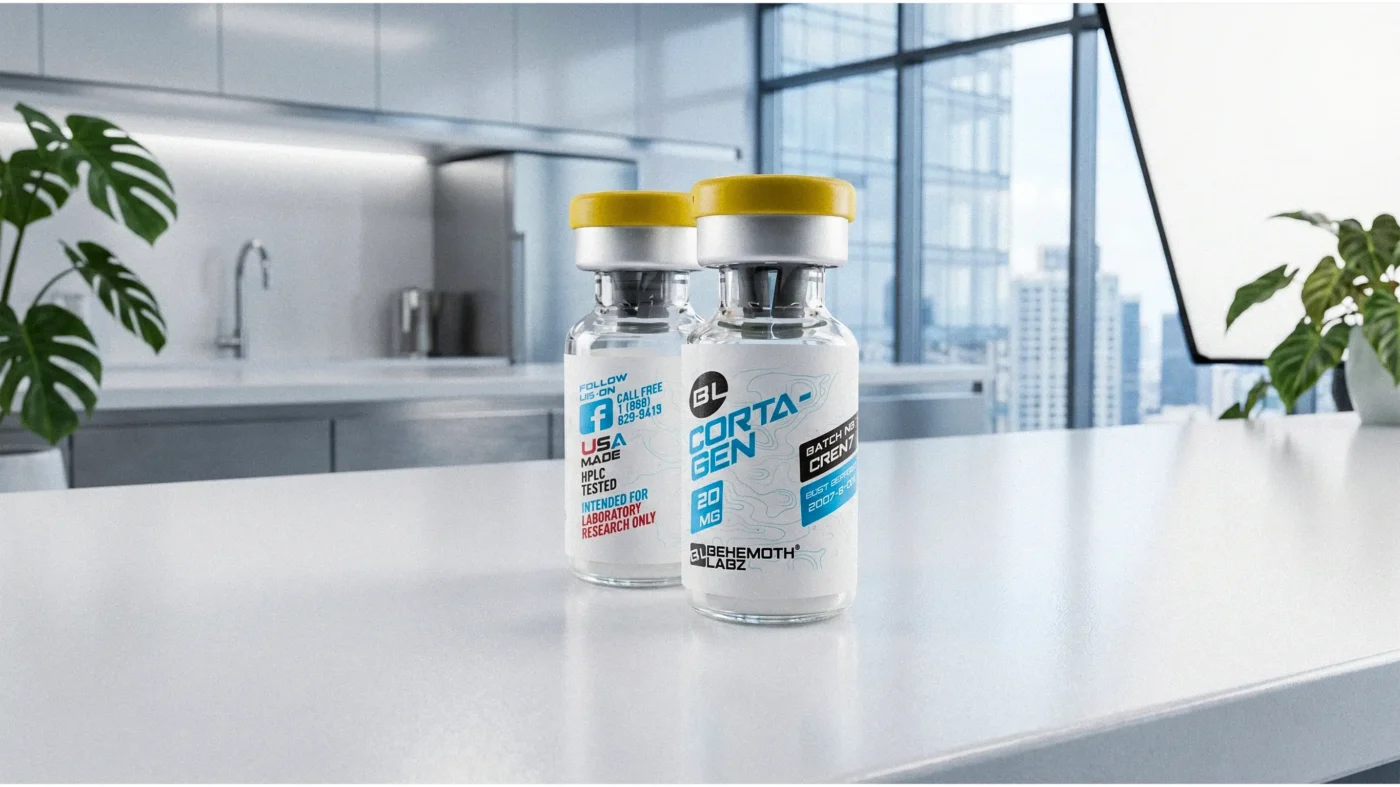
What Is Cortagen?
Cortagen peptide is a synthetic tetrapeptide with the amino acid sequence Ala-Glu-Asp-Pro (AEDP tetrapeptide). It belongs to the Khavinson peptide family and was derived through amino acid analysis of Cortexin, a natural brain cortex preparation. In preclinical research models, it has been investigated for gene expression modulation at the chromatin level, oxidative stress markers in neural tissue, and cardiac gene expression changes. Some of the heavyweights in the peptide world are BPC-157, Epitalon, and Semax. Cortagen is quieter than they are. But this is exactly what makes it interesting to researchers. In experimental settings, Cortagen peptide has become popular for its potential role in:- Neuroprotection
- Antioxidant activity, and
- Cardiovascular gene modulation
Cortagen Mechanism of Action:
Nootropic peptides act through neurotransmitter modulation or growth factors that work through receptor activation. Cortagen is totally different. In preclinical research models, it has been investigated for activity at the epigenetic level. Research shows that short Khavinson peptides interact directly with chromatin. This affects chromatin accessibility and transcriptional activation of select gene regions. This means Cortagen does not simply trigger a short-lived signalling cascade. Instead, it may boost shifts in gene expression patterns that persist beyond the period of administration. This is what separates the AEDP tetrapeptide mechanistically from most conventional research peptides.Cortagen vs Cortexin: Are They the Same?
This is one of the most common points of confusion in Cortagen research. However, it is a question worth answering. Cortexin is a natural preparation extracted from brain cortex tissue. It is a complex mixture with multiple peptides, amino acids, nucleic acids, and other bioactive compounds. It is a natural extract, and as such, its composition is not precisely defined. Cortagen (Ala-Glu-Asp-Pro) is a single, fully defined synthetic tetrapeptide. It was created through directed chemical synthesis of cortexin. Cortexin is the raw material that pointed researchers in the right direction. Cortagen is the precise, reproducible compound that came out. Cortagen offers the reproducibility and purity that a complex natural extract cannot. Every vial of the AEDP tetrapeptide contains the same compound.Cortagen vs Epitalon vs Vilon: What Makes Each One Different
Cortagen peptide sits within the same research lineage as Epitalon and Vilon. All three are Khavinson peptides. Cortagen (AEDP tetrapeptide) is cortex-derived. If your research involves the central nervous system or brain tissue gene expression, Cortagen is the Khavinson peptide most directly relevant to that work. Epitalon (Ala-Glu-Asp-Gly) is pineal-derived. It is the most studied of all Khavinson peptides in the anti-aging and longevity space. Where Cortagen targets cortical tissue, Epitalon's activity is oriented toward the pineal gland and systemic aging processes. Vilon (Lys-Glu) is a dipeptide derived from thymus tissue. It is the shortest of the three and is studied primarily for immune modulation and thymic function in experimental settings.What Does Cortagen Research Show in Preclinical Models?
Preclinical animal studies have reported the following observations:- Reduction in lipid peroxidation
- Attenuation of oxidative protein modification markers
- Modulation of antioxidant enzyme activity
- Significant alteration of cardiac gene expression
- Modulation of interleukin-2 expression in immune cell models i
- A distinct transcriptional signature compared to related Khavinson peptides (Epitalon, Vilon)
Cortagen in Animal Study Protocols
There is no established human dosage for Cortagen. The figures below are from laboratory animal studies alone. Female CBA mice: Injection (subcutaneous) — 5 consecutive days — Cardiac gene expression microarray study Male Wistar rats: Injection — Short course — Free-radical and antioxidant activity studyCortagen Safety Profile and Toxicological Considerations
The safety of Cortagen has not been established in humans. As a bioactive peptide with potential effects on gene expression pathways, it should be treated as a compound with an unknown toxicological profile.How to Store and Handle Cortagen in a Lab Setting
Cortagen is typically supplied as a lyophilized powder. Like all peptide bioregulators in this class, proper handling is non-negotiable. This maintains compound integrity and experimental reproducibility. Storage: Lyophilized Cortagen should be stored at −20°C in a dry environment, protected from light and humidity. Reconstitution: When reconstituting, use sterile bacteriostatic water or sterile saline.Conclusion
Cortagen peptide is one of the more understudied compounds in the Khavinson peptide family. Yet it remains a compelling subject for researchers willing to go beyond the mainstream. As an AEDP tetrapeptide derived from brain cortex analysis, it occupies a distinct position among bioregulatory peptides. It is an advantage defined not by receptor-level signaling, but by gene expression bioregulator activity at the chromatin level. The preclinical data, while limited, point to a compound with a broad transcriptional footprint. This contains oxidative stress modulation in neural tissue and cardiac gene expression changes across more than 100 transcripts. What sets Cortagen peptide apart from related Khavinson peptides like Epitalon and Vilon is its cortical origin. Moreover, its specific research profile in neuroprotection and peripheral nerve models makes it fascinating. For laboratories working with peptide bioregulators in gene expression research, the AEDP tetrapeptide represents a molecularly precise, reproducible tool. This is one peptide that the broader research community is only beginning to characterize. As interest in Khavinson peptides grows, Cortagen is likely to attract more attention in the coming years.FAQs
Who developed Cortagen?
Cortagen was developed at the St. Petersburg Institute of Bioregulation and Gerontology, Russian Academy of Medical Sciences. Professor Vladimir Khavinson is known to be its inventor.Is Cortagen FDA-approved?
No. Cortagen has not received FDA approval. It is certainly not approved for human or veterinary use. It is available strictly as a research compound for use in laboratory settings.Can Cortagen be taken orally?
All published preclinical research says Cortagen is to be used as an injectable. No oral bioavailability data have been published for this compound.How does Cortagen differ from Epitalon?
Both are Khavinson peptides that work through chromatin modulation and gene expression bioregulator activity. However, they differ in origin tissue and research focus. Cortagen is cortex-derived and of interest in neuroprotection and neural gene regulation. Epitalon is pineal-derived and is most studied for telomere-related and anti-aging effects.BehemothLabz Disclaimer
ATTENTION: All BehemothLabz products are strictly for LABORATORY AND RESEARCH PURPOSES ONLY. They are not to be used for any human or veterinary purposes. Please make sure you go through the Terms and Conditions and familiarize yourself with them, as it is important. Kindly research the scientific uses of this product before making any purchases. Make note that the packaging and labels of the product may differ from those shown on the website. Buying the product means you agree to our Terms and Conditions. You can contact our customer service team at support@behemothlabz.com if you are not fully satisfied with the product.References
- Kozina LS, et al. "Effects of bioactive tetrapeptides on free-radical processes." Bulletin of Experimental Biology and Medicine. 2007;143(6):744–6. https://pubmed.ncbi.nlm.nih.gov/17653641/
- Anisimov SV, Khavinson VKh, Anisimov VN. "Elucidation of the effect of brain cortex tetrapeptide Cortagen on gene expression in mouse heart by microarray." Neuro Endocrinology Letters. 2004;25(1–2):87–93. https://pubmed.ncbi.nlm.nih.gov/15159690/
