



Peptides
What Is the Mechanism of Action of PE-22-28?
05
May
May
It is a seven-amino-acid peptide. It blocks a potassium channel most researchers have never heard of. In preclinical models, what followed was worth paying attention to. Here is the science. If you follow peptide research, you would have heard of spadin. It was the first natural peptide found to block the TREK-1 potassium channel. The early preclinical data were promising. But Spadin had one big problem. It broke down fast. In the blood, it lasted only about seven hours before its activity fell off. PE-22-28 came out to solve this problem. The mechanism of action of PE-22-28 Peptide started with Spadin. Researchers found a shorter fragment that worked better. The result was a seven-amino-acid peptide. Lab studies showed stronger TREK-1 binding, longer action, and a cleaner profile.
PE-22-28 is roughly 300 to 500 times more potent than spadin at the TREK-1 channel in experimental settings. It also lasts more than three times as long.
What Is PE-22-28?
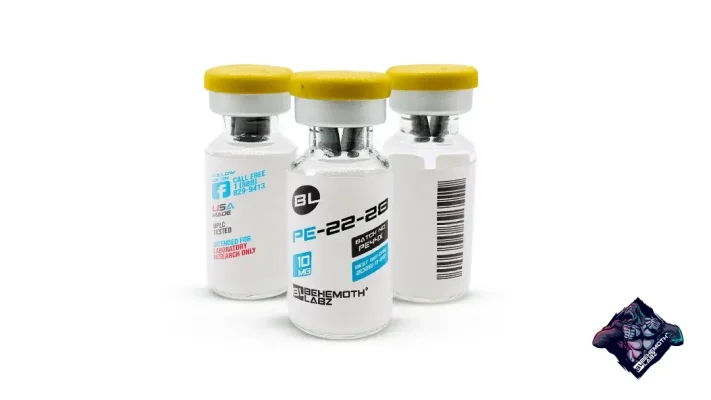
PE-22-28 is a research peptide. It is a shortened analog of spadin. It was designed to block the TREK-1 potassium channel more effectively than its parent compound. The name tells you where it comes from. It refers to amino acid positions 22-28 in the sortilin propeptide sequence. Sortilin is also known as neurotensin receptor 3. When the cell processes sortilin, it releases spadin as a byproduct. PE-22-28 is a smaller fragment of that same sequence. It is sold strictly for laboratory and research purposes. It is not approved for human or veterinary use.What Is the TREK-1 Potassium Channel?
TREK-1 is a two-pore domain potassium channel. Most potassium channels only open when a signal tells them to. TREK-1 is different. It stays slightly open all the time. Scientists call it a leak channel. Its job is to let potassium ions slowly flow out of the neuron. This keeps the neuron in a resting, less excitable state. When TREK-1 is too active, neurons become hard to fire. In preclinical stress models, high TREK-1 activity in hippocampal neurons has been linked to impaired synaptic transmission. It has also been linked to reduced neuroplasticity. That is why TREK-1 inhibition has become so interesting in experimental research.Where Does PE-22-28 Come From?
To understand PE-22-28, you need to know what sortilin is. Sortilin is a type-1 transmembrane receptor. When the cell processes it, it releases a small peptide fragment. That fragment is spadin. Spadin binds to TREK-1 and blocks it. Researchers then studied how spadin breaks down in the blood. They mapped its degradation products. From that work, they identified a core seven-residue sequence. That sequence was PE-22-28. It kept the ability to block TREK-1 but was more stable and more potent.Is PE-22-28 the Same as Spadin? What Is the Difference?
No. They are related but not the same. Spadin is 17 amino acids. PE-22-28 is 7. Spadin was discovered first, as a natural compound. PE-22-28 was designed from Spadin's breakdown products. The key differences in experimental settings:| Parameter | PE-22-28 | Spadin |
| Peptide Length | 7 amino acids | 17 amino acids |
| TREK-1 IC₅₀ | ~0.12 nM | 40–60 nM |
| Duration of Action | Up to 23 hours | ~7 hours |
| TREK-1 vs TREK-2 Selectivity | Higher | Moderate |
| Preclinical Models Used | Forced swim, novelty-suppressed feeding | Same |
So, What Is the Mechanism of Action of PE-22-28, Exactly?
PE-22-28 works by blocking the TREK-1 potassium channel. Here is what happens, step by step, in experimental settings:- PE-22-28 Binds to TREK-1. The peptide attaches to the TREK-1 channel at the neuron's cell membrane. It makes a very tight bind with its IC₅₀ at about 0.12 nM. For context, spadin binds at 40–60 nM. Lower IC₅₀ means stronger action at smaller amounts.
- Potassium Efflux Is Reduced. With the channel blocked, fewer potassium ions flow out. The neuron becomes easier to fire.
- Glutamatergic Transmission Is Restored. When TREK-1 is blocked in these laboratory models, that signaling pathway shows signs of recovery.
- Neurogenesis and Synaptogenesis Are Stimulated. In laboratory models, PE-22-28 was directly proportional to new neuron formation and increased synapse density.
PE-22-28 Stability and Duration of Action
Spadin lasted about seven hours in experimental settings. 7 hours and all activity dropped. That was a real problem. You could not maintain steady conditions across a study. PE-22-28 solved part of that. In laboratory models, its action lasted up to 23 hours. That is more than three times longer. Researchers also tested what happens when you modify the ends of the peptide. Changes to the N-terminal or C-terminal ends could keep TREK-1 inhibition intact or kill it entirely. This structure-activity relationship data is useful for designing further spadin analog research compounds.Conclusion
PE-22-28 is a shorter, more stable version of spadin. It blocks the TREK-1 potassium channel with greater potency. To top that, it lasts up to 23 hours in laboratory models. In preclinical settings, it showed effects in behavioral assays within just four days. Unlike most research peptides, it targets membrane excitability directly rather than neurotransmitter levels. Its dose-dependent biphasic behavior also suggests that TREK-1 is a more complex target than it first appears. All findings remain in experimental settings only, and no human trials currently exist for PE-22-28.Frequently Asked Questions
What is PE-22-28?
PE-22-28 is a seven-amino-acid research peptide. It is a shortened analog of spadin, derived from the sortilin propeptide sequence. It is studied for its ability to block the TREK-1 potassium channel in preclinical models.What does PE-22-28 stand for?
The name refers to amino acid positions 22 to 28 within the sortilin propeptide sequence. It is sometimes written as PE 22-28.Is PE-22-28 the same as spadin?
No. Spadin is 17 amino acids. PE-22-28 is 7. PE-22-28 was derived from studying how spadin degrades in the blood. It is more potent and more stable in experimental settings.How does PE-22-28 work?
It blocks the TREK-1 two-pore domain potassium channel. This reduces potassium efflux from neurons and lowers the firing threshold.What channel does PE-22-28 block?
TREK-1 channel. It is a two-pore domain found in neuronal membranes.What is the IC₅₀ of PE-22-28 for TREK-1?
Approximately 0.12 nM in patch-clamp studies on hTREK-1/HEK cells. This is 300 to 500 times more potent than spadin under the same conditions.Is PE-22-28 selective for TREK-1 over TREK-2?
In experimental settings, yes. Research on spadin and its analogs shows antagonism of TREK-1 specifically. It shows very little activity at the closely related TREK-2 channel.How long does PE-22-28 last in experimental settings?
Up to 23 hours in laboratory models. Spadin, by comparison, lasted around seven hours.Why was PE-22-28 developed instead of using Spadin?
Spadin degraded too quickly. PE-22-28 was built from Spadin's blood degradation products to be more stable, more potent, and longer-lasting.Is PE-22-28 approved for human use?
No. PE-22-28 has not been approved by any regulatory authority for human or veterinary use.What is PE-22-28 sold for?
Laboratory and research purposes only. Note: All BehemothLabz products are strictly for LABORATORY AND RESEARCH PURPOSES ONLY. They are not to be used for any human or veterinary purposes. Shop All Peptides at BehemothLabzReferences
[1] Djillani A, Pietri M, Moreno S, Heurteaux C, Mazella J, Borsotto M. Shortened Spadin Analogs Display Better TREK-1 Inhibition, Stability and Antidepressant Activity. Frontiers in Pharmacology. 2017;8:643. https://doi.org/10.3389/fphar.2017.00643 [2] Ma R, Lewis A. Spadin Selectively Antagonizes Arachidonic Acid Activation of TREK-1 Channels. Frontiers in Pharmacology. 2020;11:434. https://doi.org/10.3389/fphar.2020.00434